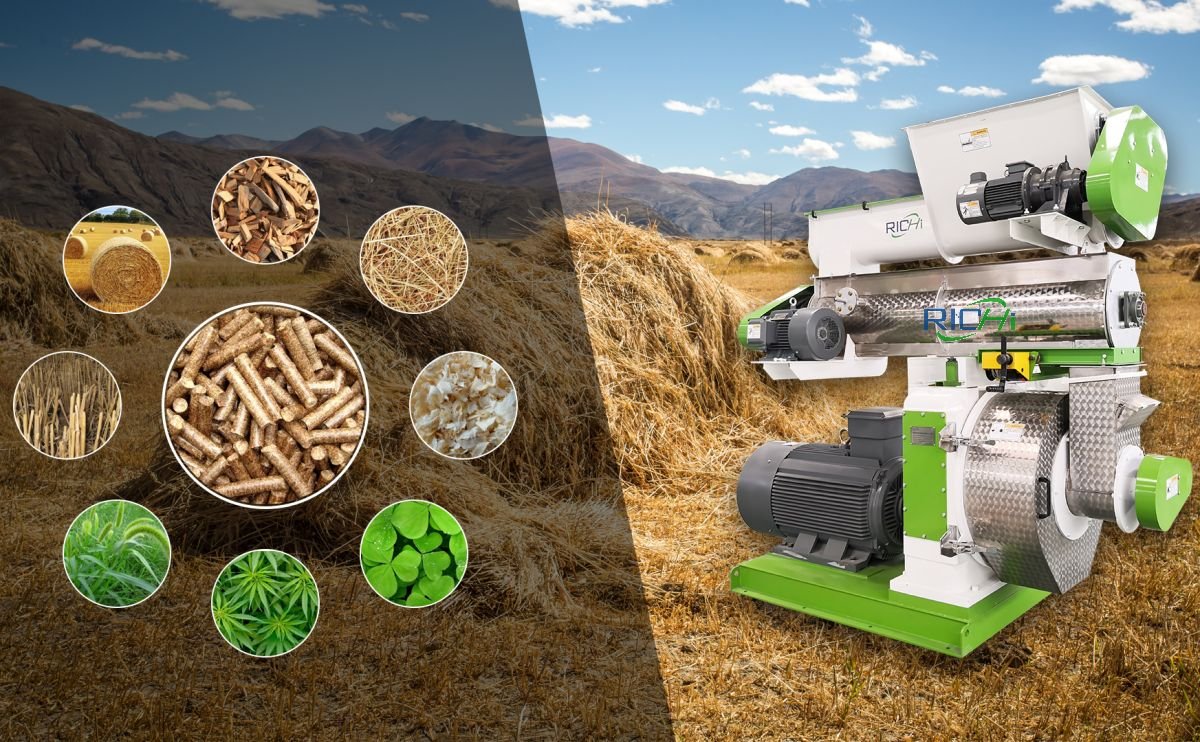
A hay pellet mill project should be planned around the forage that will actually arrive at the factory, not an assumed uniform raw material. Alfalfa, timothy, oat hay and mixed grass differ in leaf-to-stem ratio, fiber length, moisture and bulk density. These characteristics affect grinding, feeding, compression and the proportion of fines. A buyer who selects the press before defining the forage supply risks purchasing a machine whose nominal capacity cannot be maintained with the available material.
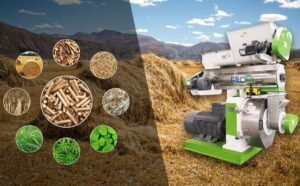
RICHI’s hay pellet mill information describes single-machine reference capacities of 0.5–8 t/h and pellet applications for feed, biomass fuel, fertilizer and animal bedding. The product page describes a ring-die system and notes that the process configuration changes with the intended product and forage condition. The practical output depends on moisture, particle size, formula, pellet diameter and the share of hay in the mixture.
Build the Procurement Specification Around the Forage Contract
Before requesting a quotation, establish the supply contract or internal harvest plan. Record forage species, bale type, average and maximum moisture, seasonal volume, contamination and delivery schedule. A plant receiving round bales has different unloading and bale-breaking requirements from one receiving loose hay meal. The storage design should account for seasonal inventory, covered space, fire access and stock rotation.
Keep alfalfa, grass hay and mixed forage identifiable. Their nutritional and physical characteristics differ, and the plant may need separate recipes or operating settings. If the project intends to make several products, estimate the percentage of production assigned to each forage and the number of changeovers per week. This determines whether separate bins, dedicated feeders or a more flexible batching arrangement are justified.
Do not use the highest expected annual forage tonnage as the sole basis for capacity. Estimate usable feed after field losses, storage deterioration, cleaning rejects and moisture changes. Then divide by realistic operating hours, planned maintenance and seasonal availability. This gives a more defensible hourly production target than a simple annual-tonnage calculation.
Decide Which Forage Can Be Pelleted Directly
Dry hay at a suitable moisture level may proceed to size reduction and pelleting, while fresh or wet forage may require drying or dewatering. The correct route depends on measured moisture, not the name of the crop. Calculate the water-removal duty from wet-feed rate and target moisture if a dryer is needed. Include heat source, energy cost, airflow, residence time and material handling in the comparison.
Drying cost can change the economics of the raw-material contract. A low purchase price for wet forage may be offset by fuel, electricity, labor and loss during drying. Compare delivered cost per usable dry tonne rather than cost per wet tonne. If the buyer can secure properly dried hay from suppliers, the lower investment in drying equipment may outweigh the higher raw-material price.
After drying, store forage under cover and protect it from moisture pickup. If the line uses a mixture of hay and grains, keep each material in a controlled storage and dosing route. This helps the operator maintain the formula and makes it easier to identify the cause of changes in pellet quality.
Set Grinding and Formula Conditions Before Choosing the Die
Forage must be reduced to a particle distribution that can feed evenly and form a stable pellet. Long fibers can bridge in hoppers and produce inconsistent compression, while excessive fine grinding increases energy consumption and dust. The appropriate grinding target depends on the forage type, pellet diameter, die compression and formula. Confirm it through sample trials rather than selecting a screen from a generic rule.
Hay pellets may be made from a single forage or a blended feed formula. If the finished product is marketed as complete feed, the recipe should be established by a qualified nutritionist. Grain, protein meals, minerals and liquid ingredients change the physical behavior of the mash. Record the hay proportion because a higher forage share may reduce the practical press output.
The ring die determines pellet diameter and contributes to compression behavior. The selected compression ratio should reflect the forage and product target. A dense pellet for transport may require different settings from a softer product intended for a particular feeding system. Do not assume that a die that works for alfalfa will produce the same result with mature timothy or mixed hay.
Plan the Feeder and Conditioner for Variable Fiber
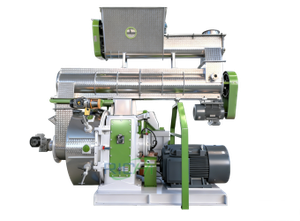
Loose hay has low bulk density and can form bridges. The feeding arrangement should maintain a controlled flow to the pelletizing chamber. RICHI’s hay pellet mill information describes a wide feed inlet, anti-bridging mechanism and variable-frequency feeder. These features should be tested with the actual forage length and moisture because bulky stems and damp clumps behave differently from dry meal.
Conditioning may be used to add steam and moisture before compression. The correct settings depend on the formula and the machine. Confirm boiler capacity, steam quality, pressure, condensate handling and water treatment. Monitor feeder speed, steam addition, motor load and pellet appearance together; changing one variable without recording the others makes it difficult to reproduce a stable operating condition.
If the feeder bridges repeatedly, investigate forage length, moisture, storage compaction and hopper geometry. Simply increasing feeder speed may cause sudden overfeeding and overload. Provide safe access for inspection and a lockout procedure for clearing blockages.
Compare Wear Parts and Service Access in the Quotation
The die and rollers carry the forming load, while the feeder, conditioner and drive system operate continuously. Compare the material and treatment of wear components, bearing specification, lubrication arrangement, gearbox access and availability of replacement parts. A quotation should identify the exact die, roller and motor configuration rather than using a generic machine name.
Allow enough space to remove the ring die and rollers, inspect the feeder screw and access lubrication points. A machine that fits the floor plan but cannot be serviced safely can create extended downtime. Confirm lifting requirements, guard removal, platform access and isolation points before civil work is finalized.
Estimate maintenance cost per saleable tonne using actual replacement cost and expected production between changes. This is more useful than comparing service life in months because plants may run different hours and use different forage. Keep records by forage type, moisture and die specification to identify the conditions that accelerate wear.
Balance Cooling, Screening and Packing With the Press
Pellets leave the press hot and need cooling before storage. The cooler should match the actual discharge and pellet dimensions. Screening removes fines and off-size pieces, and any recycle route should be sized to avoid overloading the press. The packing system should match the sales channel: bulk handling for farm use, larger bags for commercial buyers or smaller packages for retail distribution.
Use accepted packaged output as the production measure. A press may discharge at a high rate while the screen, cooler or packer restricts saleable output. Include transfer losses, fines, changeover and maintenance in the production plan. A complete line should be balanced from bale receiving to finished-product dispatch.
Commission Against the Main Forage Types
A useful performance trial should use the forage and blend expected in commercial operation. Record species, source, moisture, particle size, formula, conditioner settings, feeder speed, die, motor load, pellet dimensions, fines and saleable output after cooling and screening. Test the important forage types separately if the plant expects to switch between them.
Acceptance criteria should define test duration, product specification, sampling method and throughput basis. A brief test with dry alfalfa should not be treated as proof of output on damp mixed hay. If the result falls short, investigate drying, grinding, formula, feeding, die condition and downstream handling in sequence.
Hay Pellet Mill Supplier Evidence Checklist
Ask each supplier to state the forage type, moisture, particle size, formula proportion, pellet diameter and operating hours behind its capacity estimate. Request the proposed die compression ratio, feeder configuration, conditioner arrangement, motor rating, cooler capacity and screen capacity. Confirm whether the quoted output refers to press discharge or saleable pellets after cooling and screening. For wear components, request material specifications, heat-treatment details, inspection points, lubrication requirements and the method for adjusting the roller gap.
Also confirm how the die and rollers are removed, what lifting equipment is needed, which spare parts are recommended and which wear items are excluded from warranty. Ask whether the supplier has tested the same forage type and blend. A capacity result on dry alfalfa should not be compared directly with a result on damp mixed hay or mature stem-heavy grass.
Dry Hay Purchase vs On-Site Drying
Compare the delivered cost of dry hay with the cost of buying wetter forage and drying it at the plant. Include water removed per tonne, heat-source efficiency, electricity, labor, storage losses and dryer maintenance. If dry forage is reliably available at a reasonable premium, avoiding a dryer may reduce capital and operating complexity. If wet forage is substantially cheaper or dry supply is seasonal, on-site drying may be justified, provided the heat and storage systems are sized for the maximum design condition.
Calculate cost per usable dry tonne rather than comparing wet purchase prices. Include the dry-matter recovery after storage and handling, and model the months when forage is unavailable. Recalculate when supply contracts, moisture range, energy tariffs or annual operating hours change. Validate the preferred route with a representative batch and record the final moisture, press load and saleable pellet output.
Conclusion: Buy for the Forage You Can Supply, Not the Capacity You Hope to Reach
A hay pellet mill investment depends on forage supply, moisture, particle size, formula, feeding stability, die selection and downstream capacity. The best configuration is the one that can produce the required pellet from the buyer’s normal forage under realistic operating hours and utility costs.
For machine details and application options, review the RICHI hay pellet mill range. Prepare forage samples, species mix, moisture data, annual supply, target pellet dimensions and site utilities before confirming the equipment scope.