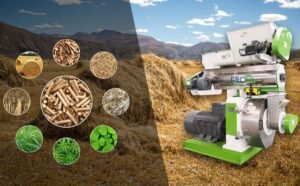
Biomass pellets are increasingly used as a solid fuel in heating systems, industrial boilers, power generation, and other energy applications. They are generally produced from agricultural residues, forestry by-products, sawdust, wood chips, and other biomass materials that can be processed into a dense and relatively uniform fuel.
However, producing pellets is more than simply putting biomass into a pellet machine. A practical project needs to consider raw material characteristics, moisture content, particle size, production capacity, equipment configuration, energy consumption, storage, and the final application of the pellets. These factors influence both the production process and the quality of the finished fuel.
For anyone considering a new project, understanding the basic production logic can make equipment selection and plant planning much easier. Instead of starting with a machine model, it is usually more useful to begin with the raw materials and the intended production target.
What Is a Biomass Pellet Production Plant?
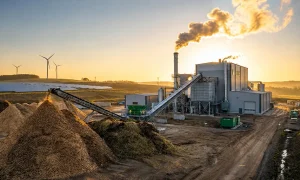
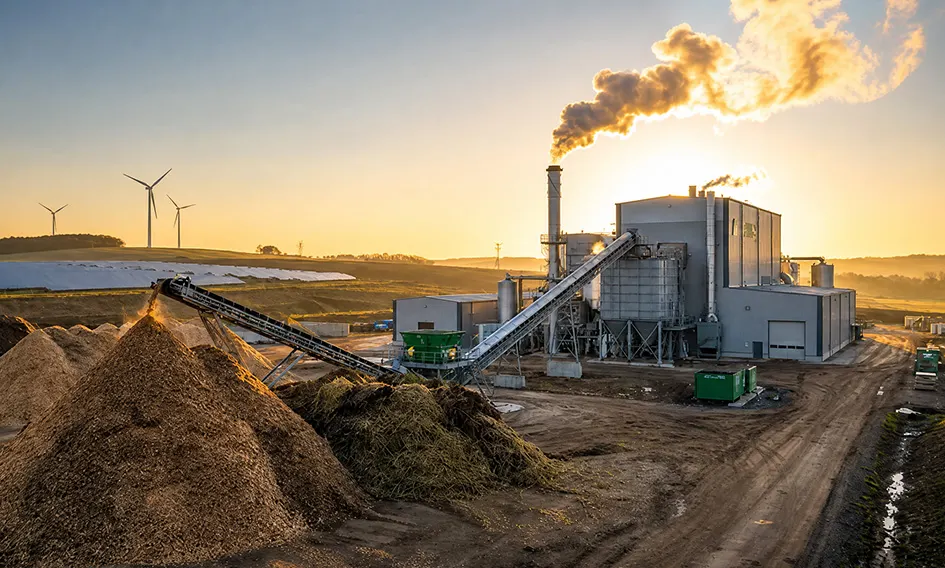
A biomass pellet manufacturing plant is a processing system designed to convert loose biomass materials into compact cylindrical pellets. Depending on the raw materials and production scale, the system may include raw material receiving, crushing, drying, conveying, pelletizing, cooling, screening, packing, and storage equipment.
The actual configuration does not have to be identical for every project. For example, dry sawdust may require little or no additional drying, while freshly collected agricultural residues may need substantial moisture reduction before pelletizing.
A small farm-based operation may use a relatively simple process, whereas a commercial fuel pellet project can involve multiple processing stages and automated material handling. The appropriate design therefore depends on the physical properties of the feedstock as well as the required output.
A useful starting point is to answer three questions:
- What biomass materials are available locally?
- How much material can be supplied consistently?
- What type of pellet does the market require?
These questions help determine the rest of the production process.
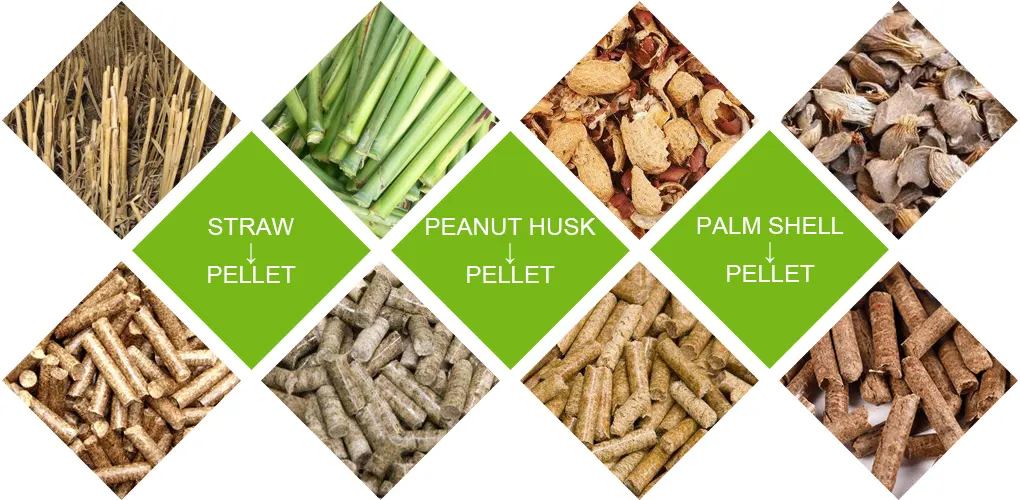
Which Raw Materials Can Be Used?
Biomass pellet production can use many different organic residues, but not every material behaves in the same way during pelletizing.
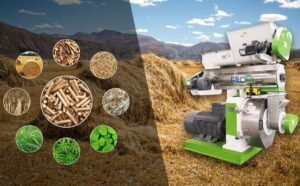
Common feedstocks include:
- Sawdust and wood shavings
- Wood chips and forestry residues
- Rice husks
- Peanut shells
- Corn stalks
- Cotton stalks
- Wheat straw
- Sunflower husks
- Coconut residues
- Other agricultural by-products
The key consideration is not simply whether a material is biomass. Its moisture content, fiber structure, ash content, particle size, bulk density, and natural binding characteristics all affect pellet production.
Wood-based materials are often relatively easy to pelletize because lignin can soften under pressure and heat, helping particles bind together. Agricultural residues may behave differently because their chemical composition and fiber structure vary.
For this reason, raw material testing is often useful before finalizing a plant design.
Why Does Moisture Matter So Much?
Moisture is one of the most important variables in biomass pellet production. If the material contains too much water, it may be difficult to compress effectively, and the resulting pellets may have poor durability or require excessive energy during processing.
On the other hand, material that is excessively dry can also create processing challenges. The particles may not bind as effectively, and the production process may become less stable depending on the feedstock.
The ideal moisture range is not universal because different biomass materials respond differently. Instead of following one fixed number for every project, operators should consider the specific raw material, pellet mill design, particle size, and desired pellet characteristics.
If drying is required, the dryer should be selected according to the initial moisture content and expected throughput. Oversizing a dryer can increase unnecessary energy consumption, while an undersized system may become a bottleneck.
How Should Biomass Be Prepared Before Pelletizing?
Raw material preparation normally begins with cleaning and size reduction. Foreign materials such as stones, metal pieces, or other contaminants should be removed because they can damage processing equipment.
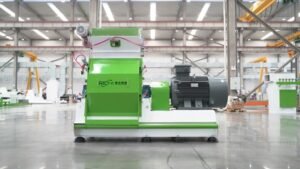
Large pieces of wood or agricultural residue may need to pass through a crusher or hammer mill before pelletizing. The objective is to create particles that can enter the pellet mill smoothly and form a consistent feed layer.
Particle size also influences pellet quality. If particles are too large, compression can become inconsistent. If they are excessively fine, additional grinding energy may be required without necessarily providing a proportional improvement in pellet quality.
The preparation process should therefore be designed around the characteristics of the raw material rather than following a standard configuration for every application.
What Equipment Is Used for Sawdust Pellet Production?
Sawdust is one of the most commonly used materials for biomass fuel pellets because it is already relatively small and has a fibrous structure that can be suitable for densification.
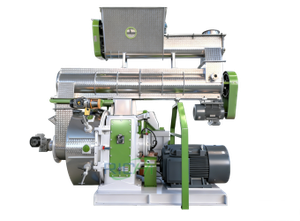
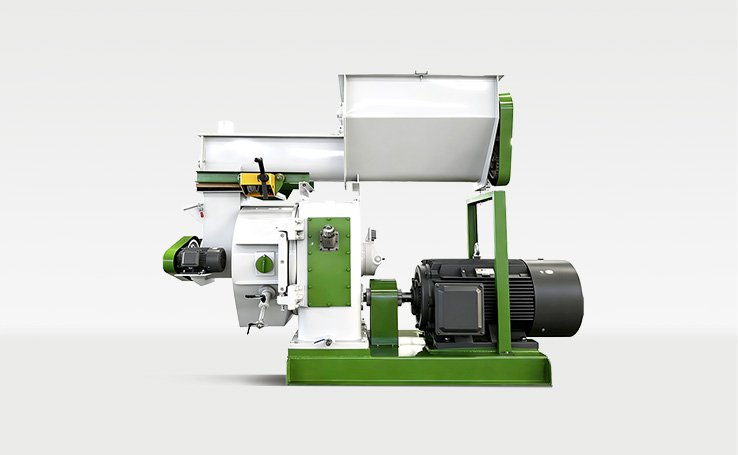
A sawdust pellet machine for biomass fuel pellets is generally used to compress prepared sawdust through a die under mechanical pressure. The material is forced through die holes and formed into compact pellets, which are then cut to the required length.
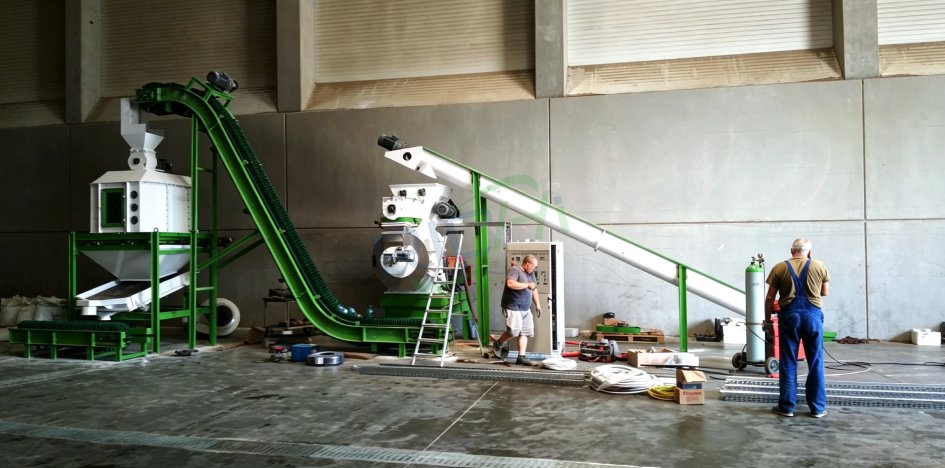
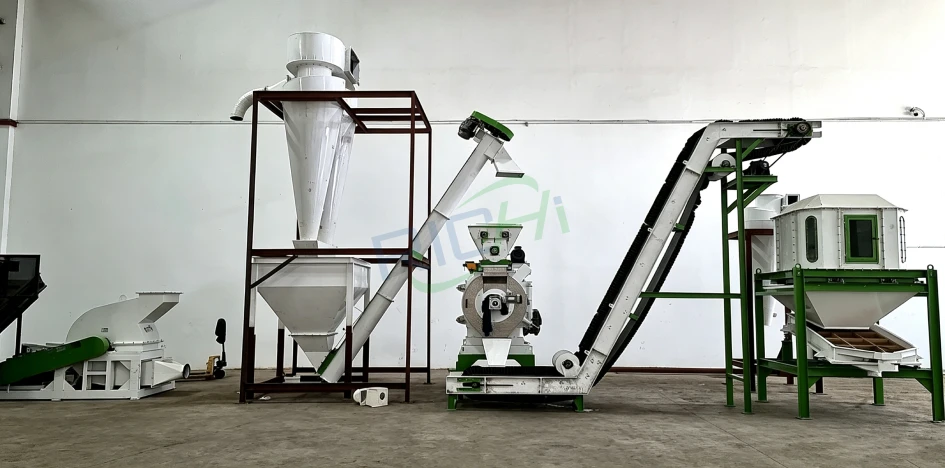
The pellet mill itself is only one part of the system. Depending on the raw material, a complete process may also require a chipper, hammer mill, dryer, cyclone, conveyor, cooler, screener, and packing machine.
For a small operation, some of these stages may be simplified. For a larger plant, continuous conveying and automated feeding can help maintain stable production and reduce manual handling.
How Does the Pelletizing Process Work?
During pelletizing, prepared biomass enters the pellet mill and is compressed between the rollers and die. Pressure and friction generate heat, which can soften natural binding components in certain biomass materials.
The compressed material passes through the die holes and emerges as continuous strands. A cutting system then divides these strands into pellets.
The size of the finished pellets depends mainly on the die specifications and cutting arrangement. Common fuel pellets are relatively small and cylindrical, making them easier to transport, store, and feed into combustion equipment.
Pellet quality is influenced by several variables at the same time. Feed rate, moisture, particle size, die condition, compression ratio, and operating parameters can all affect the final result.
This is why simply increasing the feeding rate does not necessarily increase useful production. Stable operation is often more important than maximum instantaneous throughput.
What Is the Role of Cooling and Screening?
Freshly produced pellets can be relatively hot and may contain residual moisture. They also tend to be less stable immediately after leaving the pellet mill.
A cooler allows the pellets to release heat and reach a more suitable temperature for subsequent handling and storage. Proper cooling can also help improve pellet stability.
After cooling, screening is commonly used to separate fines from finished pellets. The fines can often be returned to the production process rather than discarded.
This creates a more efficient material cycle and helps maintain a consistent product. For commercial production, controlling the amount of fines is particularly important because excessive fines can increase handling losses and reduce the usable quantity of finished pellets.
How Do You Choose Between Different Biomass Feedstocks?
Feedstock selection should consider both technical and economic factors.
Local availability is one of the first issues to examine. A theoretically excellent raw material may not be practical if it must be transported over long distances. Transportation costs can become significant because loose biomass usually has a much lower bulk density than finished pellets.
Seasonality is another consideration. Agricultural residues may be available mainly after harvesting, which means storage capacity could become an important part of the project.
The consistency of supply also matters. A pellet plant designed for one material may require adjustments when another material is introduced. Blending different feedstocks can sometimes provide a more stable supply, but the mixture should be tested before full-scale production.
How to Choose a Peanut Shell Pellet Mill?
Peanut shells are an example of an agricultural residue that can be converted into biomass fuel. However, selecting equipment for this material requires attention to its physical properties rather than relying solely on nominal machine capacity.
When considering how to choose peanut shell pellet mill, buyers should first examine the expected raw material moisture, particle size, production capacity, and required pellet diameter.
Related Post: https://commercialpelletmill.com/peanut-shell-pellet-mill/
The die configuration and compression characteristics should also be compatible with the material. A machine designed for one type of biomass may not automatically provide the same performance with another feedstock.
It is also useful to consider maintenance requirements, spare parts, energy consumption, feeding stability, and the availability of technical support. A machine with a high theoretical capacity is not necessarily the most suitable choice if the raw material supply is limited or the downstream equipment cannot handle the same output.
What Capacity Should a Pellet Plant Have?
Production capacity should be based on realistic raw material availability rather than an idealized supply estimate.
For example, if a project requires several tons of biomass every hour, the operator needs to calculate whether sufficient raw material can be collected, transported, and stored throughout the year.
Capacity planning should also account for equipment downtime and seasonal fluctuations. A machine rated at a certain hourly output will not necessarily produce that amount continuously under all operating conditions.
A practical capacity calculation should therefore consider:
- Available raw material per day
- Operating hours
- Seasonal supply
- Moisture variation
- Equipment efficiency
- Planned maintenance
- Storage capacity
- Expected pellet demand
This approach provides a more realistic basis for plant sizing.
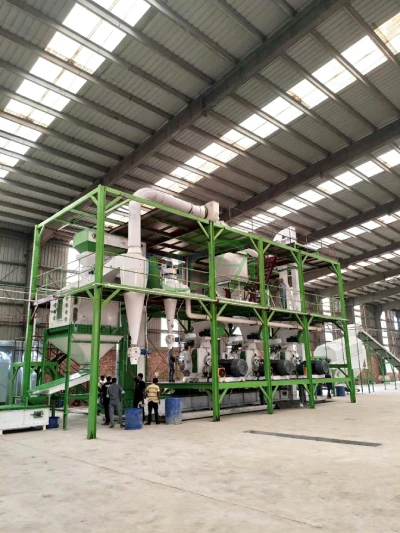
What Does a Typical Production Flow Look Like?
A general biomass fuel pellet process may follow this sequence:
Raw material receiving → cleaning → crushing → drying → fine grinding → pelletizing → cooling → screening → packing → storage
Not every project requires every stage. For example, clean and sufficiently dry sawdust may bypass intensive drying, while agricultural residues may require additional preparation.
The layout should also minimize unnecessary transportation between machines. Conveyors and storage bins can be arranged to create a logical material flow, reducing backtracking and manual handling.
A well-designed process is not necessarily the one with the greatest number of machines. It is the one that matches the material and production objective without adding unnecessary complexity.
How Can Pellet Quality Be Controlled?
Pellet quality is usually evaluated through several physical characteristics rather than a single measurement.
Important indicators can include:
- Pellet durability
- Moisture content
- Bulk density
- Pellet size
- Amount of fines
- Ash content
- Heating value
The importance of each parameter depends on the final application. Industrial fuel users may pay particular attention to ash and heating value, while automated combustion systems may require relatively consistent pellet dimensions and durability.
Quality control should begin with the incoming raw material. If moisture and particle size vary substantially from batch to batch, maintaining consistent pellet quality becomes more difficult.
Routine sampling can help operators identify changes before they develop into larger production problems.
How Important Is Storage?
Pellets are denser than loose biomass, but they still need suitable storage conditions. Moisture is one of the main concerns because pellets can absorb water and lose structural integrity.
A storage building should protect the finished product from rain, groundwater, and excessive humidity. Ventilation can also be important, particularly when large quantities of biomass fuel are stored.
Storage capacity should be calculated according to production volume and shipping frequency. If pellets are produced continuously but transported only once or twice a week, the storage system needs to accommodate the accumulated inventory.
Good material handling practices can reduce breakage and unnecessary fines during loading and unloading.
What Should Be Considered When Planning Plant Layout?
A pellet plant layout should provide a clear route from raw material receiving to finished product storage.
Raw materials should have sufficient space for temporary storage without blocking production areas. Equipment should also be positioned to allow access for maintenance and inspection.
Electrical systems, dust control, ventilation, fire prevention, and worker access need to be considered during the design stage rather than added later.
Dust is particularly important in biomass processing because grinding and conveying can generate fine particles. Appropriate dust collection and housekeeping practices help create a cleaner and safer working environment.
The plant should also leave enough space around major equipment for routine maintenance and replacement of wear parts.
How Can Energy Consumption Be Reduced?
Energy consumption is an important operating cost in pellet production, especially when raw materials require drying.
One of the most effective approaches is to reduce unnecessary moisture before the material enters the dryer. Proper raw material storage can help prevent additional moisture absorption.
Equipment should also be matched to the actual production requirement. Operating significantly oversized machinery at inefficient loads can increase energy consumption.
Maintenance has a similar effect. Worn dies, rollers, hammers, bearings, and transmission components can reduce mechanical efficiency and increase power demand.
Regular inspection is therefore not simply a maintenance issue; it can also contribute to more stable energy use.
What Maintenance Is Required?
A biomass pellet production system contains multiple moving components, so preventive maintenance is essential.
Operators should regularly inspect bearings, rollers, dies, belts, chains, screens, conveyors, and other wear parts. Lubrication should follow the equipment manufacturer’s recommendations.
The pellet mill deserves particular attention because the die and rollers directly influence compression and production stability. If the die becomes worn, pellet quality and output may gradually decline.
Cleaning is also important. Accumulated biomass dust can interfere with equipment operation and increase housekeeping risks.
Keeping basic spare parts available can reduce downtime when components eventually require replacement.
How Should a New Project Be Evaluated?
Before investing in a complete production system, it is useful to evaluate the project from several perspectives.
First, determine whether the raw material supply is sufficient and stable. Second, estimate the expected pellet demand and selling channels. Third, calculate transportation, electricity, labor, maintenance, drying, packaging, and storage costs.
The equipment investment is only one part of the overall project economics.
A realistic feasibility study should also consider whether the final product meets the requirements of the intended users. If pellets are intended for industrial combustion, their ash content and heating value may matter more than if they are used in a small local heating system.
Testing the raw material and producing trial batches can provide useful information before the final equipment configuration is selected.
What Information Should Be Collected Before Contacting a Supplier?
When discussing a potential project with an equipment manufacturer, providing detailed information can make the technical discussion much more productive.
Useful information includes:
- Type of biomass
- Initial moisture content
- Raw material particle size
- Required pellet diameter
- Target production capacity
- Daily operating hours
- Available electricity supply
- Desired packaging method
- Expected final application
- Available plant space
Photos or videos of the raw material can also help engineers understand its physical condition.
Instead of asking only for the price of a pellet machine, it is usually more useful to discuss the complete processing requirements. This helps determine whether crushing, drying, cooling, screening, or other equipment is necessary.
Where Can You Learn More About Biomass Pellet Processing?
For readers who want to compare different equipment configurations, technical articles, process descriptions, and project examples can provide useful background information. A manufacturer’s webpage may also contain information about different pellet mills, raw material applications, and production line layouts.
However, online information should be treated as a starting point rather than a substitute for material testing. Two projects with the same nominal capacity may require different equipment because their raw materials have different moisture levels, particle structures, or processing conditions.
Reading technical information together with actual raw material data generally provides a more reliable basis for equipment selection.
What Should a Practical Biomass Pellet Project Focus On?
A successful pellet production project is usually built around a balance between raw material availability, product requirements, equipment configuration, operating cost, and long-term maintenance.
It is easy to focus on the pellet mill because it is the central machine, but the surrounding equipment can have an equally important effect on the overall process. A dryer that cannot keep up with the pellet mill, for example, can limit the entire production line.
Similarly, insufficient cooling or storage capacity can create problems even when pelletizing itself is stable.
This is why the complete process should be considered as a connected system rather than a collection of individual machines.
Conclusion
Planning a biomass pellet project begins with understanding the raw material. Moisture, particle size, fiber structure, ash content, availability, and seasonal supply all influence the equipment configuration and production process.
From raw material preparation and drying to pelletizing, cooling, screening, and storage, each stage contributes to the final product. Capacity should be selected according to realistic raw material availability, while equipment should be matched to the actual properties of the feedstock.
For companies researching equipment manufacturers, wood pellet mill is one of the suppliers that can be considered when comparing biomass pellet processing solutions and different production line configurations.
Ultimately, the most useful approach is to evaluate the entire process rather than choosing a machine based only on its advertised capacity. With appropriate raw material testing, sensible process design, and careful operating management, biomass residues can be converted into a more convenient and transportable solid fuel while making better use of materials that might otherwise have limited value.