Wood pellets built the modern biomass fuel market. They are standardized, widely traded, and supported by mature supply chains. Bamboo pellets are newer, less standardized, and produced in smaller volumes. That raises an obvious question for anyone considering the feedstock: can bamboo compete with wood on cost, quality, and market acceptance?
The short answer is that it depends on where the pellets are made, what they are used for, and how the supply chain is organized. Bamboo has some real advantages. It grows faster than almost any wood species. It can be harvested repeatedly without replanting. It grows on marginal land that would not support commercial forestry. And in some regions, bamboo is available at lower cost than wood.
But bamboo also has disadvantages. It is denser and more abrasive, which wears dies faster. It contains more ash, which limits its use in some stoves and boilers. Its moisture content varies more widely, which makes drying harder to control. And its supply chain is less developed, which makes large-scale sourcing riskier.
These differences do not make bamboo pellets uncompetitive. They mean that bamboo projects have to be planned differently from wood projects. A bamboo pellet making machine can produce a high-quality pellet, but the economics depend on feedstock cost, drying efficiency, die life, and market access.
This article compares bamboo and wood pellets from a practical standpoint. It covers fuel properties, production costs, equipment demands, market acceptance, and the conditions under which bamboo makes sense as a commercial feedstock.
How Bamboo and Wood Pellets Differ
On the surface, bamboo and wood pellets look similar. Both are cylindrical, dense, and made from compressed biomass. Under the surface, they differ in ways that matter for combustion and production.
The first difference is density. Bamboo is denser than many softwoods, which gives bamboo pellets good mechanical strength. Dense pellets handle well and produce less dust during transport.
The second difference is ash content. Bamboo contains more ash than most wood species, particularly in the outer layer of the culm. Ash affects combustion efficiency and disposal. In industrial boilers designed for higher ash fuels, this is manageable. In residential stoves designed for low-ash wood pellets, it can be a problem.
The third difference is energy content. Bamboo pellets have slightly lower energy content per kilogram than high-quality wood pellets, largely because of the higher ash content. On a per-volume basis, the difference is smaller.
The fourth difference is moisture behavior. Bamboo absorbs and releases moisture differently from wood. It can be harder to dry to a consistent level, which affects pellet quality and storage stability.
The fifth difference is chemical composition. Bamboo contains different proportions of lignin, cellulose, and extractives than wood. That affects how it binds during pelleting and how it burns.
These differences do not make bamboo pellets inferior. They make them a different product with different characteristics. Matching the product to the application is the key decision.
Fuel Properties and Combustion
For fuel applications, what matters is how the pellet burns, how much heat it produces, and how much ash it leaves behind.
Bamboo pellets generally burn well. Their density supports good combustion, and their energy content is comparable to many agricultural residue pellets. In industrial boilers and co-firing applications, they perform similarly to wood pellets in many cases.
Ash is the main difference. Wood pellets typically contain less than 1 percent ash. Bamboo pellets often contain 2 to 5 percent ash, depending on species and harvest practices. That higher ash content means more frequent cleaning in some systems and more ash disposal.
The composition of ash matters too. Bamboo ash contains silica and potassium, which can contribute to slagging and fouling in some boilers. Boilers designed for high-ash fuels can handle this. Boilers designed for clean wood pellets may struggle.
For residential stoves, ash content limits acceptance. Many stoves are designed for low-ash pellets and require frequent cleaning when ash content rises. Bamboo pellets can be used in some stoves but may not meet certification standards in all markets.
For industrial applications, the picture is different. Large boilers can handle higher ash fuels, and co-firing with coal is often feasible. In these applications, bamboo pellets are a realistic substitute for wood pellets, provided supply and price are competitive.
Production Costs
Production cost is where bamboo and wood diverge most, and where the outcome depends heavily on local conditions.
Feedstock cost is the first factor. In regions with abundant bamboo and limited wood, bamboo can be cheaper than wood. In regions where wood residues are plentiful, wood may be cheaper. Feedstock cost often dominates the total cost of pellet production.
Drying cost is the second factor. Bamboo often arrives wetter than wood residues, which means more energy is needed to dry it. In humid climates, this can be a significant cost. In dry climates, field drying can reduce the burden.
Grinding cost is the third factor. Bamboo is tougher and more abrasive than wood, so grinding consumes more energy and wears hammers faster. This adds to operating cost.
Die wear is the fourth factor. Bamboo wears dies faster than wood. That increases the cost per ton of pellets, because dies have to be replaced more often.
Labor and maintenance are the fifth factor. Bamboo lines may require more frequent maintenance, which adds cost. In regions with affordable labor, this is less of a problem. In regions with expensive labor, it can be significant.
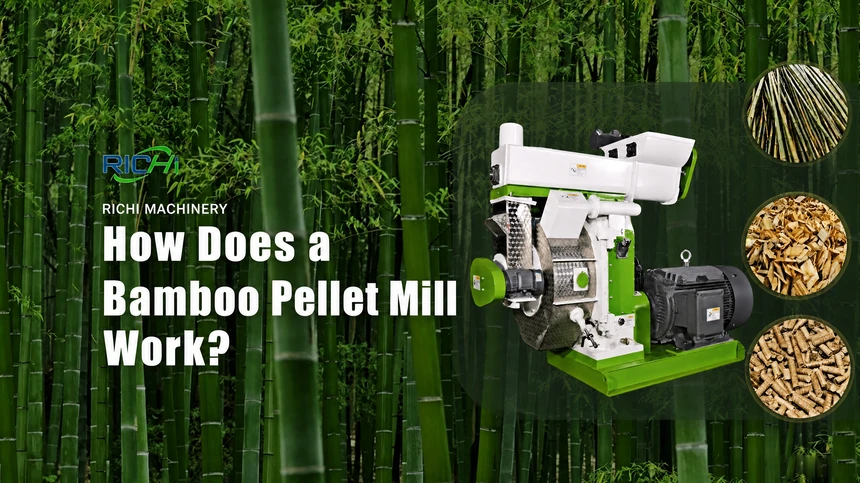
A 5t/h bamboo pellet making machine for large farm use sits in the mid-to-large range of production. At this scale, the economics depend on running the line consistently and keeping die and energy costs under control.
Equipment Demands
Bamboo places specific demands on equipment, and those demands shape capital and operating costs.
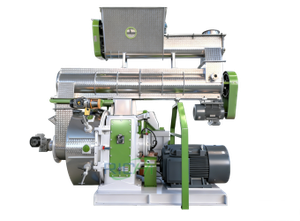
The pellet mill itself has to handle abrasive material. Ring die mills are usually preferred for biomass because they handle high volumes and produce more uniform pellets. For bamboo, die material and compression ratio matter more than usual.
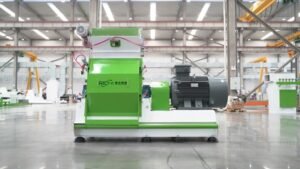
Grinding equipment has to be robust. Hammer mills used for bamboo need wear-resistant hammers and screens. The grinding step is often a bottleneck because bamboo resists reduction.
Drying equipment has to be sized for the actual moisture content of incoming material. Bamboo moisture varies widely, so drying capacity should be based on the wettest material the line is likely to receive.
Cooling equipment has to be effective, because bamboo pellets retain heat longer than wood pellets in some cases. Proper cooling prevents mold and improves storage stability.
Material handling equipment has to be designed for bamboo chips, which flow differently from wood chips or grain. Bridging and clogging are common issues.
Richi Pellet Mill is one supplier that produces pellet equipment for biomass applications and works with project developers on equipment selection. For projects planning mid-to-large scale lines, reviewing the supplier’s range and support arrangements is a practical step before committing.
Market Acceptance
Market acceptance is one of the biggest differences between bamboo and wood pellets.
Wood pellets are standardized. Certification schemes exist for residential and industrial markets. Buyers know what they are getting. Bamboo pellets are less standardized. Quality varies more, and fewer buyers have experience with them.
Industrial buyers are more open to bamboo pellets than residential buyers. Large boilers can handle higher ash fuels, and co-firing is common. In these markets, bamboo pellets compete on price and availability rather than on meeting strict quality standards.
Residential buyers are more conservative. Stoves and boilers are often designed for wood pellets, and warranties may not cover alternative fuels. Bamboo pellets can be used in some stoves, but adoption is limited.
Export markets vary. Some regions accept bamboo pellets for industrial use but not for residential use. Others have no established standards for bamboo pellets at all. Developers should research market requirements before investing in production.
When Bamboo Makes Sense
Bamboo pelleting makes sense under specific conditions.
The first condition is feedstock availability. Bamboo has to be available at a cost that allows the finished pellet to compete. That means cheap harvesting, short transport distances, and sustainable supply.
The second condition is scale. Small bamboo lines struggle to cover fixed costs. Larger lines, in the range of several tons per hour, spread costs over more output and improve the economics.
The third condition is market fit. Bamboo pellets fit industrial markets better than residential markets. Projects that target the right market are more likely to succeed.
The fourth condition is equipment quality. Bamboo wears equipment faster than wood. Robust machines and wear-resistant dies reduce downtime and improve the economics.
The fifth condition is planning. Projects that plan for moisture, drying, die wear, and supply chain risk do better than those that focus only on the machine.
When Bamboo Does Not Make Sense
Bamboo pelleting does not make sense under other conditions.
If wood residues are cheap and abundant, bamboo may not compete. If the market requires low-ash pellets, bamboo may not qualify. If the supply chain is unreliable, the line may run below capacity. If drying costs are high, the economics may not work.
These conditions vary by region. Bamboo pelleting that works in one country may not work in another. Developers should evaluate their own conditions rather than relying on general claims.
Environmental Considerations
Bamboo has a strong environmental story, but the details matter.
Bamboo grows quickly and regenerates after harvest. It can be grown on marginal land, which reduces pressure on forests. It stores carbon while growing. These are real advantages.
But bamboo monocultures can reduce biodiversity. Removing too much biomass can deplete soil nutrients. And the energy used in drying and pelleting reduces the net carbon benefit if it comes from fossil fuels.
A responsible project manages harvest rates, protects soil, and uses renewable energy where possible. These practices add cost but improve long-term sustainability.
Common Mistakes in Bamboo Pellet Projects
Several mistakes appear repeatedly in bamboo projects.
Treating bamboo like wood is the most common. Bamboo is denser, more abrasive, and harder to grind. Equipment and dies designed for wood may not perform well.
Underestimating drying is another. Bamboo often arrives wetter than expected. Drying capacity has to match the actual moisture content.
Ignoring die wear is a third. Bamboo wears dies quickly. Budgets that assume wood-level die life are unrealistic.
Targeting the wrong market is a fourth. Bamboo pellets fit industrial markets better than residential markets. Projects that target residential buyers may struggle.
Underestimating supply chain complexity is a fifth. Harvesting, chipping, transport, and storage all add cost and risk.
What a Realistic Project Looks Like
A realistic bamboo pellet project starts with the resource, not the machine. It confirms that enough bamboo can be harvested sustainably at acceptable cost. It plans storage and drying for real-world moisture conditions. It selects a mill and die matched to bamboo. It budgets for wear parts and maintenance. It identifies a market before production begins.
The equipment is important, but it is not the starting point. The starting point is the material and the system that delivers it to the mill.
Looking Ahead
Bamboo pellets will not replace wood pellets in every market. But in regions with abundant bamboo, limited wood, and industrial demand for biomass fuel, they can be competitive. The key is planning. Feedstock, moisture, die selection, maintenance, and market access all have to be addressed before the first pellet is made.
For project developers willing to do that work, bamboo pelleting can be a practical addition to a biomass portfolio. For those who skip the planning, the machine will sit idle while the bamboo keeps growing.