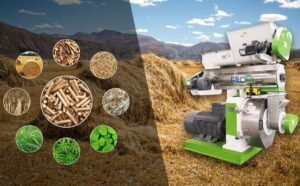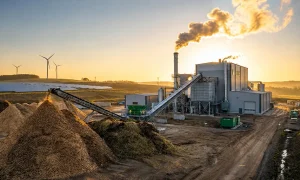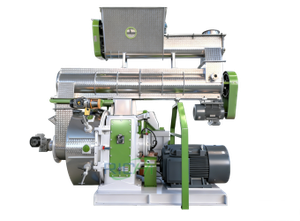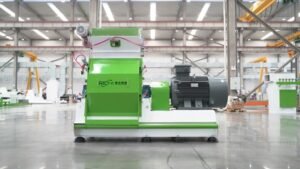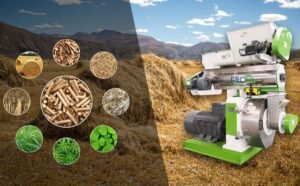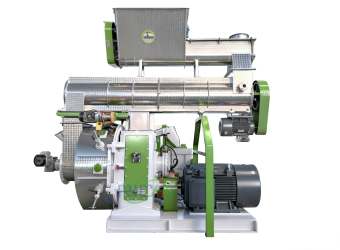
The cost of a hemp biomass pellet project can vary considerably because the pellet mill is only one part of the production system. Raw-material preparation, moisture control, production capacity, cooling, screening, electrical requirements, and automation can all affect the final investment.
When researching hemp biomass pellet machine price, buyers should therefore compare complete equipment configurations rather than looking at the price of a single machine.
Raw Material Comes First
Hemp biomass can arrive at a processing plant in different forms.
Some producers work with long stalks collected directly from agricultural fields. Others receive already chopped stems or processing residues.
Long stalks require additional size reduction, while prepared material may need fewer machines.
Foreign materials such as stones, soil, and metal should also be removed before processing because they can increase wear on cutting and crushing equipment.
The condition of the raw material is therefore one of the first factors affecting the equipment budget.
Capacity Changes the Configuration
A small farm producing fuel for its own use does not require the same system as a commercial biomass factory.
Production capacity affects the size of the pellet mill, crusher, conveyor, cooler, storage equipment, and other auxiliary machinery.
The operating schedule also matters.
A smaller machine running several hours per day can meet a modest daily target, while continuous commercial production may require higher-capacity equipment.
The right approach is to calculate the required daily output from the available hemp supply rather than automatically selecting the largest model.
Does Moisture Increase the Cost?
It can.
Hemp stalks with excessive moisture may need a mechanical dryer before pelletizing.
A drying system adds not only the dryer itself but also fans, conveyors, heat supply, controls, and additional floor space.
However, a producer working with properly dried hemp residues may not need this stage.
For this reason, actual moisture measurement can prevent both under-sizing and unnecessary equipment purchases.
Why Does Crushing Affect the Budget?
Pellet mills require prepared feedstock.
Long hemp stalks generally pass through cutting or crushing equipment before reaching the pellet mill.
The crushing system should provide enough material to keep the pellet mill supplied.
However, grinding the biomass too finely can increase electricity consumption. The target should be a suitable and consistent particle size rather than maximum fineness.
The required crusher model and motor power therefore depend on both capacity and material characteristics.
Pellet Size Also Matters
The desired pellet diameter determines the die configuration.
Fuel markets may use different pellet specifications depending on heating equipment and customer requirements.
If a factory wants to produce multiple sizes, additional dies and suitable changeover arrangements may be needed.
The pellet diameter should therefore be confirmed before the equipment quotation is finalized.
Comparing Other Agricultural Biomass
Hemp is not the only agricultural residue that can be pelletized.
For example, a sunflower husk pellet machine price comparison may involve equipment with a similar overall purpose but a different feedstock.
Sunflower husks can differ from hemp residues in particle structure, bulk density, ash characteristics, and moisture. As a result, the required preparation process may not be identical.
The comparison is useful because it shows why machine prices should always be evaluated together with raw-material conditions.
What Is Included in a Complete System?
A complete biomass pellet system may contain:
- Raw-material cutter
- Hammer mill
- Dryer
- Conveyor
- Pellet mill
- Cooler
- Screener
- Storage equipment
- Packing machine
- Electrical control system
Not every project needs all of these machines.
A producer with dry, pre-sized hemp residues may be able to use a simpler process, while a factory receiving fresh stalks may need a more complete preparation section.
Automation and Labor Costs
Automation can change the initial project investment.
A small plant may use manual feeding and packing. A larger commercial facility may use automatic conveying, weighing, storage, and packaging.
Automation can reduce manual material handling and make continuous production easier to manage, but the appropriate level depends on the actual production target.
A small project should not automatically adopt the same automation level as a large industrial factory.
What About Electricity?
The pellet mill is not the only electrical load.
The crusher, dryer fans, conveyors, cooler, screening equipment, and packing system may all require motors.
Before purchasing equipment, the buyer should provide the available voltage, frequency, and phase.
The total connected load should be considered when planning the factory’s electrical infrastructure.
How Should Buyers Compare Quotations?
A useful comparison should include:
- Production capacity
- Raw-material requirements
- Main motor power
- Auxiliary equipment
- Pellet diameter
- Drying requirements
- Cooling and screening
- Automation level
- Spare parts
- Installation scope
Comparing only the quoted pellet mill price can create an inaccurate picture of the actual project investment.
Small Project or Complete Production Line?
The choice depends on the intended use.
A small producer may start with a compact machine and basic auxiliary equipment. A commercial operator selling biomass fuel may require a complete pellet plant with continuous conveying, cooling, screening, storage, and packing.
Factory space should also be considered from the beginning.
Leaving room for an additional pellet mill or larger storage system can make future expansion easier.
Ultimately, the cost of hemp pellet production equipment is determined by the relationship between raw-material conditions, output requirements, and system configuration. A properly matched project can avoid unnecessary equipment while still providing stable production. Buyers preparing a quotation request should provide detailed information about their material and target output to receive a more realistic equipment plan. Find more information about biomass pellet systems, equipment configuration, and project planning before making a final purchase decision.
Related Post: https://pelletizerequipment.com/bagasse-pellet-machine/