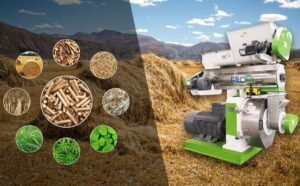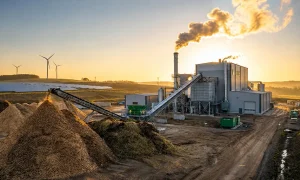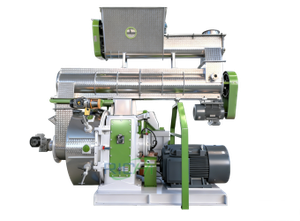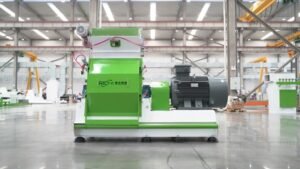
Choosing the right wood crushing machine is an important decision for biomass processing, wood pellet production, briquette manufacturing, animal bedding, fuel production, and other wood recycling applications. Different wood materials have different sizes, moisture levels, hardness, and processing requirements. As a result, there is no single crusher that is suitable for every project.
A machine that works well for dry sawdust may not be suitable for large branches or wood logs. Similarly, a high-capacity hammer mill designed for a commercial biomass plant may be unnecessary for a small farm or workshop.
The right choice should therefore be based on the complete processing requirement rather than simply the machine price or motor power.
This guide explains the main factors to consider when choosing a wood crushing machine, including raw material, feeding size, required particle size, capacity, moisture, machine structure, energy consumption, wear parts, dust collection, maintenance, and integration with downstream equipment.
Whether you are processing wood chips, branches, sawdust, wood shavings, bark, or other wood residues, these factors can help you select a suitable crushing solution.
What Is a Wood Crushing Machine?
A wood crushing machine is industrial equipment used to reduce wood materials into smaller and more uniform particles. Depending on the machine type, it can process logs, branches, wood chips, sawdust, wood shavings, bark, forestry residues, and other wood waste.
The purpose of crushing is not necessarily to make the material as fine as possible. Instead, the objective is to produce a particle size that is suitable for the next processing step.
For example:
- Large branches may need to be processed by a wood chipper first.
- Wood chips may then be crushed or ground into smaller particles.
- Sawdust may require a sawdust grinder or hammer mill if a finer particle size is needed.
- Extremely fine biomass powder may require an ultrafine pulverizer.
- Materials for pellet production normally require relatively uniform particles suitable for conditioning and pelletizing.
A complete biomass processing system may therefore contain several size-reduction stages rather than one machine.
Why Is Proper Wood Crushing Important?
Wood crushing directly affects the efficiency and stability of many downstream processes.
When particle size is too large or highly variable, problems can occur during drying, conveying, mixing, pelletizing, briquetting, or combustion.
Proper crushing can provide several advantages.
1. More Uniform Particle Size
Uniform particles are easier to transport, mix, dry, and process.
For pellet production, suitable particle size can also help the material pass through the pellet mill more consistently.
2. Better Drying
Smaller particles generally provide more surface area for heat and air contact.
If wet wood chips are reduced to an appropriate size before drying, heat transfer and moisture evaporation can become more consistent.
However, excessive grinding should be avoided because producing unnecessarily fine particles can increase electricity consumption and dust generation.
3. Improved Pelletizing
Particle size is one of the factors affecting pellet quality.
If oversized pieces enter the pellet mill, they can make feeding less stable and affect pellet formation. Proper grinding creates a more consistent feedstock for the pellet mill.
4. Better Use of Wood Waste
Branches, sawmill residues, furniture wood, bark, and other wood waste can be converted into useful biomass feedstock after suitable size reduction.
This makes wood crushing an important step in biomass recycling and fuel pellet production.
Step 1: Identify Your Raw Material
The first question when choosing a wood crushing machine should be:
What type of wood material will you process?
Different materials require different crushing equipment.
Common raw materials include:
- Logs
- Tree branches
- Wood chips
- Sawdust
- Wood shavings
- Bark
- Forestry residues
- Sawmill waste
- Furniture waste
- Agricultural wood residues
- Bamboo residues
- Recycled wood
The material’s original size is particularly important.
For example, a machine designed for sawdust cannot normally replace a wood chipper for large logs. Large pieces need a suitable first-stage size reduction process before they can enter a fine grinding machine.
Large Logs and Branches
Large logs, tree branches, and similar materials normally require a wood chipper or heavy-duty crushing machine as the first processing stage.
The objective is to reduce the large material into manageable wood chips.
After chipping, the material can be screened or sent to another crushing or grinding stage if smaller particles are required.
Wood Chips
Wood chips are already smaller than logs, but their dimensions can vary significantly.
A crusher or hammer mill can be used when wood chips need to be reduced further for:
- Pellet production
- Briquette production
- Biomass fuel
- Drying
- Fine wood processing
The correct machine depends on the initial chip size and required final particle size.
Sawdust
Sawdust is already relatively fine, so additional crushing may not always be necessary.
If the existing sawdust meets the particle-size requirements of your pellet mill or other application, it may be possible to send it directly to drying or pelletizing.
However, if the sawdust contains oversized particles, clumps, shavings, or inconsistent material, a sawdust hammer mill, sawdust grinder, or other fine crushing equipment may be useful.
Wood Shavings
Wood shavings have a relatively large surface area but may have a low bulk density and irregular shape.
The appropriate machine depends on whether the final product is intended for:
- Animal bedding
- Biomass fuel
- Pellets
- Briquettes
- Further grinding
The goal should be to achieve the required material structure without unnecessary energy consumption.
Step 2: Check the Maximum Feeding Size
The maximum size of the material entering the machine is another critical selection factor.
A crusher designed for 10–20 mm wood particles should not be expected to process large branches several hundred millimeters in diameter.
If the raw material is too large, a multi-stage system is usually more practical.
For example:
Logs and branches → Wood chipper → Wood crusher/hammer mill → Dryer → Pellet mill
This configuration separates coarse size reduction from fine grinding.
For sawdust:
Sawdust → Screening → Hammer mill or grinder if necessary → Dryer → Pellet mill
The exact process depends on the raw material condition and final product requirements.
When asking a manufacturer for a quotation, provide the maximum raw material dimensions rather than simply saying “wood waste.”
Step 3: Determine the Required Final Particle Size
Another major question is:
How small does the material need to be?
Different applications require different particle sizes.
For example, biomass fuel production may have different requirements from animal bedding or wood powder production.
In pellet production, the ideal particle size depends on:
- Raw material type
- Pellet diameter
- Pellet mill design
- Die compression ratio
- Material moisture
- Pellet application
- Required pellet quality
A common mistake is assuming that smaller particles always produce better pellets.
This is not necessarily true.
Over-grinding can increase:
- Electricity consumption
- Machine wear
- Dust generation
- Operating costs
- Heat generation inside the grinding chamber
The better approach is to determine the particle size actually required by the downstream process.
Step 4: Choose the Right Type of Wood Crushing Machine
There are several types of size-reduction equipment used in biomass processing.
Wood Chipper
An industrial wood chipper is normally used for large logs, branches, tree trunks, and other coarse wood materials.
Its main function is to turn large wood into relatively uniform chips.
It is commonly used as the first stage of a wood pellet production process.
Wood Crusher
A wood crusher can be used to reduce wood chips, branches, wood waste, and other materials into smaller particles.
The appropriate structure depends on the material size, hardness, required output size, and capacity.
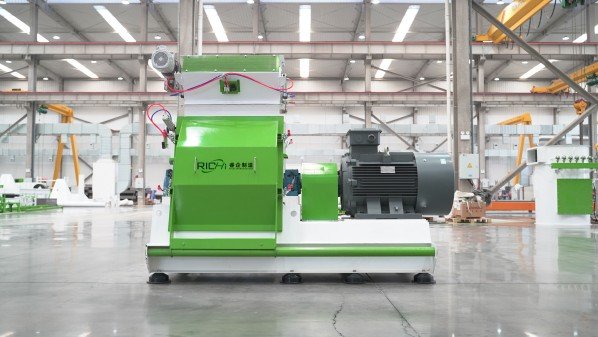
Hammer Mill
A hammer mill uses rotating hammers to impact and break the material inside a grinding chamber.
It is widely used for biomass materials such as:
- Sawdust
- Wood chips
- Straw
- Corn stalks
- Grass
- Agricultural residues
A screen controls the particle size of the discharged material.
For wood pellet production, a hammer mill is often used after coarse size reduction.
Sawdust Hammer Mill
A sawdust hammer mill is designed for reducing relatively fine wood residues into a more uniform particle size.
(Learn more:https://pelletisingmachine.com/sawdust-hammer-mill/)
It can be useful when sawdust contains oversized particles or when a finer material is required.
When researching the sawdust hammer mill price, do not compare quotations based only on the machine body.
You should also consider:
- Motor power
- Capacity
- Feeding system
- Screen configuration
- Rotor design
- Hammer material
- Bearings
- Dust collection
- Electrical control
- Spare parts
- Installation requirements
- After-sales service
A lower initial price does not necessarily mean lower total operating cost.
Wood Shredder
A shredder is generally used for bulky and mixed wood waste.
It is particularly useful when the feedstock contains irregular materials or when coarse size reduction is required before subsequent processing.
For clean sawdust and wood chips, a hammer mill may be more appropriate depending on the required final size.
Ultrafine Pulverizer
When very fine biomass powder is required, conventional crushing equipment may not be sufficient.
An ultrafine pulverizer can be considered when the final application requires much finer particles.
The machine should only be selected when such fine grinding is actually required because ultrafine processing normally consumes more energy.
Step 5: Calculate the Required Capacity
Capacity is one of the most important factors in machine selection.
You should determine the actual material throughput required by the entire production line.
For example, if a pellet production line is designed to produce 5 tons of pellets per hour, the grinding section must be capable of supplying enough prepared material to maintain stable pellet mill operation.
However, the crusher’s rated capacity should not be considered in isolation.
Actual capacity can be affected by:
- Raw material type
- Moisture
- Particle size
- Bulk density
- Screen opening
- Motor power
- Feeding rate
- Grinding requirements
- Operator control
Sawdust, wood chips, and wet wood waste can have very different bulk densities, so the same machine may not produce exactly the same throughput with every material.
For a reliable equipment selection, provide the manufacturer with your expected raw material and required production capacity.
Step 6: Consider Raw Material Moisture
Moisture has a major effect on wood crushing performance.
Very wet wood can create several problems:
- Material may stick to the screen.
- The grinding chamber may become blocked.
- Throughput may decrease.
- Energy consumption may increase.
- Particle size may become less uniform.
- Cleaning and maintenance may become more frequent.
This is particularly important when processing sawdust and fine wood residues.
If the material is too wet for stable grinding, a drying stage or better moisture management may be required.
In a biomass pellet plant, the process may therefore be:
Wood → Chipping → Crushing → Drying → Fine Grinding → Pelletizing
or:
Wood → Chipping → Drying → Fine Grinding → Pelletizing
depending on the raw material.
The correct arrangement should be determined according to material size, moisture, and the capabilities of the selected equipment.
Step 7: Evaluate the Screen
For hammer mills and similar grinding equipment, the screen is an important component because it affects final particle size and throughput.
A smaller screen opening generally produces finer particles, but it may also reduce capacity and increase energy consumption.
A larger opening can increase throughput but may produce coarser material.
Therefore, the screen should be selected according to the downstream application.
It is also useful to consider whether the machine manufacturer can provide different screen specifications.
Having interchangeable screens can make the machine more flexible if you process different materials or need different particle sizes.
Step 8: Check Motor Power and Energy Consumption
Motor power should match the required processing load.
A larger motor is not automatically better.
If the motor is oversized for the application, the equipment may have unnecessary investment and operating costs.
If the motor is undersized, the machine may suffer from:
- Overloading
- Reduced capacity
- Unstable operation
- Frequent stoppages
- Increased motor temperature
The ideal configuration should balance capacity, particle size, material characteristics, and energy consumption.
When comparing different machines, consider energy consumption per ton of usable output rather than motor power alone.
Step 9: Examine the Machine Structure
A wood crushing machine operates under continuous mechanical stress, so structural quality matters.
Important components include:
- Housing
- Rotor
- Hammers or knives
- Screen
- Bearings
- Drive system
- Feeding system
- Discharge system
For industrial applications, the machine body should be strong enough to withstand vibration and repeated impact.
Rotor balance is also important for stable operation.
Poor balance can increase vibration and accelerate wear on bearings and other components.
When purchasing equipment, ask the supplier about manufacturing standards, rotor balancing, material selection, welding quality, and component brands.
Step 10: Pay Attention to Wear Parts
Wood crushing involves continuous impact and friction.
Hammers, knives, screens, and other wear parts eventually need replacement or maintenance.
The service life of these components depends on:
- Material hardness
- Material contamination
- Operating hours
- Feeding rate
- Moisture
- Machine design
- Maintenance
If recycled wood is being processed, metal contamination can be particularly damaging.
For this reason, metal detection or magnetic separation may be necessary before crushing in some applications.
When evaluating equipment, ask:
- How long do the hammers normally last?
- How easy are they to replace?
- Are spare parts readily available?
- Can the hammer positions be adjusted or reversed?
- How frequently should the screen be inspected?
These details can have a major impact on long-term operating costs.
Step 11: Consider Dust Collection
Wood crushing generates dust, especially when processing dry sawdust and fine biomass.
A suitable dust collection system helps control airborne particles and keeps the working environment cleaner.
A complete system may include:
- Cyclone
- Bag filter
- Dust collector
- Exhaust fan
- Air ducts
- Dust discharge equipment
The dust collection system should be matched to the crushing equipment and material characteristics.
For larger biomass plants, dust control should be considered as part of the overall engineering design rather than added as an afterthought.
Safety requirements should also be reviewed according to local regulations and the characteristics of the specific material.
Step 12: Consider Maintenance Requirements
A machine that is difficult to maintain can create unnecessary downtime.
Before purchasing a wood crushing machine, check how easily operators can access:
- Grinding chamber
- Screens
- Hammers
- Bearings
- Lubrication points
- Drive components
A good design should allow routine inspection and wear-part replacement without excessive downtime.
You should also establish a regular maintenance schedule covering:
- Bearing lubrication
- Hammer inspection
- Screen inspection
- Rotor inspection
- Motor inspection
- Belt or coupling inspection
- Dust collector cleaning
- Fastener inspection
Preventive maintenance is generally more economical than waiting for a major failure.
Step 13: Match the Crusher with the Complete Production Line
A common mistake is selecting the crusher separately from the rest of the production system.
In reality, the crushing machine should be compatible with the entire process.
For a wood pellet plant, a typical process may look like:
Raw Wood → Chipping → Crushing → Screening → Drying → Pelletizing → Cooling → Screening → Packing
Depending on the raw material, some stages may be combined, removed, or repeated.
For example, clean sawdust may not need a wood chipper.
Likewise, properly sized sawdust may not require additional grinding.
The objective is to avoid unnecessary processing.
RICHI can design complete biomass processing systems according to the customer’s raw materials, capacity, moisture, particle size, and final product requirements.
This approach makes it possible to coordinate the crusher with dryers, pellet mills, conveyors, dust collectors, coolers, screens, and packing systems.
Step 14: Think About Future Production Requirements
A machine should satisfy current production requirements, but it is also worth considering future expansion.
For example, if your current requirement is 2 tons per hour but you expect production to increase significantly in the future, selecting a system with appropriate expansion potential may reduce future modification costs.
However, excessive oversizing should also be avoided.
An oversized machine may have a higher investment cost and may not operate at its most efficient point during low-load production.
The ideal solution is usually a realistic balance between current demand and planned expansion.
Step 15: Compare Total Cost Instead of Only Purchase Price
Price is obviously an important part of equipment selection, but the purchase price is only one part of the total cost.
When comparing suppliers, consider:
Total Cost = Equipment Investment + Installation + Energy + Wear Parts + Maintenance + Downtime
For example, one supplier may offer a lower initial machine price, while another machine may have:
- Better wear resistance
- Lower energy consumption
- Easier maintenance
- Longer component life
- Better dust collection
- More stable operation
- Better after-sales support
In the long term, these factors can influence the economics of the project.
This is especially important when comparing the sawdust hammer mill price between different manufacturers.
Always make sure you are comparing machines with similar specifications.
A quotation for a basic hammer mill should not be directly compared with a complete grinding system that includes feeding, dust collection, electrical controls, spare parts, and installation support.
What Questions Should You Ask a Wood Crushing Machine Manufacturer?
Before requesting a quotation, prepare detailed information about your project.
You can ask the manufacturer:
1. What raw materials can the machine process?
Provide the actual material rather than simply saying “biomass.”
2. What is the maximum feeding size?
Give the maximum diameter or dimensions of the raw material.
3. What final particle size can the machine produce?
Tell the supplier the required output size.
4. What is the actual capacity?
Ask for capacity under conditions similar to your material.
5. What moisture range is suitable?
This is particularly important for sawdust and wet wood residues.
6. What motor power is required?
Check whether the proposed power matches your production requirements.
7. What screen specifications are available?
Different screens can provide different output particle sizes.
8. What are the main wear parts?
Ask about hammers, knives, screens, bearings, and their expected service life.
9. Is a dust collection system included?
Find out whether the quotation covers the complete dust-control system.
10. Can the machine be integrated into a complete pellet plant?
This is important if your final goal is pellet production rather than simply crushing wood.
How to Choose a Wood Crushing Machine for Pellet Production
If your goal is to manufacture wood pellets, particle size should be considered together with moisture and pellet mill specifications.
A typical wood pellet production process is:
Raw Wood → Chipping → Crushing/Grinding → Drying → Pelletizing → Cooling → Screening → Packing
Large wood materials normally require coarse processing first.
Sawdust and small wood residues may require only screening, drying, or additional grinding depending on their existing particle size.
The grinding system should provide a consistent feedstock for the pellet mill.
After grinding, the material usually enters the drying system if its moisture is too high. The dried material is then fed to the pellet mill.
The pellet mill compresses the prepared biomass through a die to form pellets.
Therefore, the crushing machine should not be selected independently.
Its output should match the requirements of the dryer and pellet mill.
(investigate this site: RICHI Machinery )
Common Mistakes When Choosing a Wood Crusher
Mistake 1: Choosing Only by Price
The cheapest machine may not have the lowest total operating cost.
Always compare specifications, wear parts, energy consumption, capacity, and service.
Mistake 2: Buying an Oversized Machine
A larger machine can cost more without providing meaningful benefits if your production requirement is small.
Mistake 3: Ignoring Moisture
Wet material can significantly change grinding performance.
Mistake 4: Grinding Material Too Fine
Unnecessarily fine particles can increase power consumption and dust.
Mistake 5: Ignoring Dust Collection
Dry biomass can generate significant dust during crushing.
Mistake 6: Not Considering the Downstream Process
The crusher must produce material suitable for drying, pelletizing, briquetting, or the final application.
Mistake 7: Forgetting About Wear Parts
A machine may appear economical until frequent hammer or screen replacement increases operating costs.
Wood Crushing Machine Selection Checklist
Before placing an order, confirm the following:
| Factor | What to Check |
|---|---|
| Raw material | Wood chips, sawdust, branches, shavings, etc. |
| Maximum feed size | Diameter or dimensions |
| Moisture | Initial moisture range |
| Required output | Final particle size |
| Capacity | Tons per hour |
| Motor | Suitable power and electrical specification |
| Screen | Opening size and replacement options |
| Wear parts | Hammer, knife, screen and bearing quality |
| Dust control | Cyclone, bag filter, fan and ducts |
| Feeding | Manual, conveyor or automatic feeding |
| Maintenance | Access and replacement convenience |
| Spare parts | Availability and delivery |
| Automation | Electrical control and monitoring |
| Installation | Installation requirements |
| Downstream equipment | Dryer, pellet mill, cooler, screen, etc. |
This checklist can help you provide a manufacturer with enough information to recommend a suitable machine.
Can One Wood Crushing Machine Process All Wood Materials?
Usually, no.
Wood materials can vary greatly in size, moisture, density, hardness, and shape.
A machine optimized for sawdust may not be appropriate for large branches. A chipper designed for large logs may not be the best choice for producing fine sawdust.
For this reason, professional biomass plants often use a combination of machines.
A typical multi-stage system may include:
Wood Chipper → Wood Crusher → Hammer Mill → Screening → Drying → Pellet Mill
Not every project requires every machine.
The process should be customized according to the raw material and final product.
How RICHI Can Help You Choose a Wood Crushing Solution
Selecting a wood crushing machine is easier when the equipment is designed as part of the complete production process.
RICHI provides biomass processing equipment and turnkey engineering solutions for wood pellet and biomass projects.
Depending on the raw material and final product, the system can include:
- Wood chippers
- Wood crushers
- Hammer mills
- Sawdust grinding machines
- Screening machines
- Dryers
- Hot-air furnaces
- Cyclones
- Dust collectors
- Conveyors
- Pellet mills
- Pellet coolers
- Vibrating screens
- Packing machines
- Electrical control systems
The equipment configuration can be designed according to raw material type, feeding size, moisture, required particle size, production capacity, and final application.
For customers who already have suitable crushing equipment, RICHI can also help evaluate whether the existing equipment can be integrated into a new pellet production line.
This can help avoid unnecessary equipment investment.
Final Thoughts
Choosing the right wood crushing machine requires more than comparing machine prices.
The best starting point is to understand your raw material and production requirements.
Consider the material type, maximum feeding size, moisture, required particle size, capacity, energy consumption, machine structure, wear parts, dust collection, maintenance, and downstream equipment.
For large wood materials, a chipper or coarse crusher may be required first. For wood chips, a crusher or hammer mill may provide the required size reduction. For sawdust, a sawdust hammer mill or grinder may only be necessary when additional size reduction is needed.
If you are comparing sawdust hammer mill price, make sure different quotations are based on comparable specifications. Look beyond the initial purchase cost and consider energy consumption, wear-part life, maintenance, dust collection, installation, and after-sales service.
Most importantly, choose the crushing equipment as part of the complete processing system.
When the crushing, drying, pelletizing, cooling, screening, conveying, and packing systems are properly matched, the entire biomass production process can operate more smoothly and consistently.
If you are planning a wood pellet plant, biomass fuel project, or wood waste processing line, providing the manufacturer with your raw material type, maximum feed size, moisture, desired particle size, and required capacity is the best way to receive an accurate equipment recommendation and quotation.