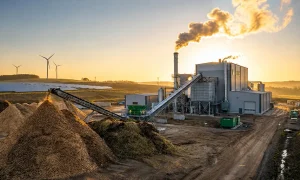
Biomass pelletizing has become one of the most effective technologies for converting agricultural residues, forestry waste, and wood by-products into renewable solid fuel. As demand for biomass pellets continues to increase worldwide, manufacturers are under growing pressure to improve production efficiency, reduce operating costs, and produce pellets with consistent quality. Whether supplying residential heating markets, industrial boilers, or biomass power plants, pellet producers must optimize every stage of the manufacturing process to remain competitive.
Pelletizing performance is influenced by numerous factors, including raw material quality, moisture content, particle size, equipment configuration, die design, process control, and maintenance practices. Even small improvements in these areas can significantly increase production capacity while reducing energy consumption and equipment wear.
This article explores the key strategies for improving biomass pelletizing performance and explains how modern production technologies help manufacturers maximize efficiency, profitability, and pellet quality.
Why Pelletizing Performance Matters
High pelletizing performance delivers benefits throughout the production process.
Efficient production enables manufacturers to:
- Increase hourly output
- Lower electricity consumption
- Reduce maintenance costs
- Produce stronger pellets
- Improve fuel consistency
- Minimize raw material waste
- Extend equipment life
- Increase overall profitability
Optimizing production performance also helps manufacturers respond more effectively to growing market demand.
Understanding Biomass Pelletizing
Biomass pelletizing is a mechanical densification process that compresses finely prepared biomass into dense cylindrical pellets.
During compression, rollers force biomass through precision die holes under high pressure. Friction generates heat that softens natural lignin within the biomass, allowing it to bind particles together without chemical additives in most cases.
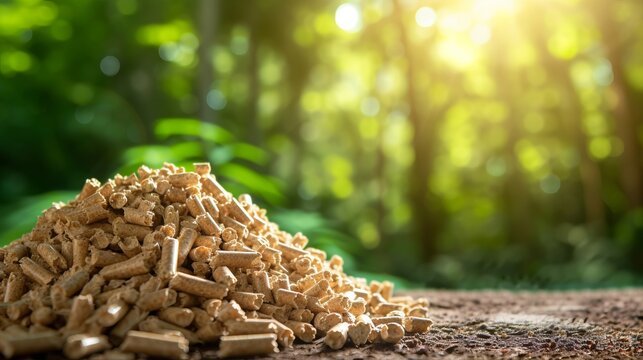
The resulting pellets are characterized by:
- High density
- Uniform dimensions
- Excellent durability
- Improved combustion efficiency
- Easier transportation
- Better storage stability
These characteristics make pellet fuel an attractive renewable energy source.
(Learn more about high-performance wood pellet mill)
Start with High-Quality Raw Materials
Improving pelletizing performance begins with selecting appropriate feedstocks.
Common biomass materials include:
- Sawdust
- Wood chips
- Wood shavings
- Rice husks
- Wheat straw
- Corn stalks
- Cotton stalks
- Peanut shells
- Palm fiber
- Coconut shells
- Sugarcane bagasse
- Bamboo
- Forestry residues
Each material possesses different physical properties.
Understanding these differences allows operators to adjust production parameters accordingly.
Maintain Proper Moisture Content
Moisture is one of the most important variables affecting pellet production.
Excessive moisture reduces pellet density and production efficiency.
Insufficient moisture decreases pellet durability and increases energy consumption.
Most biomass materials pelletize efficiently with moisture levels between 10% and 15%.
Proper moisture control offers several benefits:
- Improved compression
- Higher pellet density
- Lower energy consumption
- Reduced die blockage
- Better pellet durability
Continuous moisture monitoring improves process consistency.
Optimize Particle Size
Uniform particle size significantly improves pellet quality.
Oversized particles reduce compression efficiency and accelerate die wear.
Extremely fine particles may increase dust generation.
Most pellet plants target particle sizes between 3 and 5 mm.
Proper grinding provides:
- Better material flow
- Uniform compression
- Improved pellet appearance
- Higher production capacity
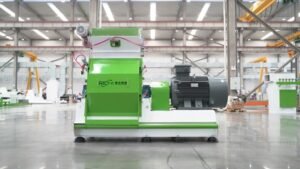
Hammer mills should be adjusted according to raw material characteristics.
Improve Drying Efficiency
Drying consumes a significant portion of production energy.
Efficient drying systems reduce operating costs while maintaining consistent moisture.
Modern rotary dryers offer:
- High throughput
- Uniform drying
- Low energy consumption
- Stable operation
Many factories recover waste heat from biomass boilers to improve drying efficiency.
Heat recovery systems lower fuel costs while improving sustainability.
Select the Right Pellet Mill
Equipment selection directly influences production performance.
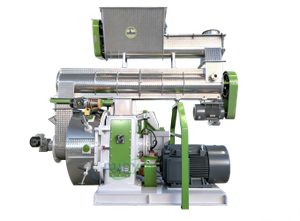
Modern pellet plants increasingly choose a vertical sawdust pellet mill because of its efficient feeding system, stable operation, and strong adaptability to different biomass materials. A vertical sawdust pellet mill is particularly effective for processing sawdust, wood shavings, wood chips, and forestry residues into high-density fuel pellets while maintaining continuous production and reducing equipment wear.
Choosing equipment that matches production capacity and raw material characteristics helps maximize long-term operational efficiency.
https://pelletisingmachine.com/vertical-ring-die-wood-pellet-mill
Optimize Die Design
The pellet die is one of the most critical components in the entire production system.
Proper die selection affects:
- Production capacity
- Pellet density
- Energy consumption
- Pellet durability
- Equipment wear
Die compression ratio should match the specific raw material.
Softwood, hardwood, straw, and agricultural residues often require different die configurations.
Regular inspection ensures optimal performance.
Adjust Roller Pressure Correctly
Roller pressure determines how effectively biomass is compressed.
Insufficient pressure results in:
- Loose pellets
- Low density
- Poor durability
Excessive pressure may cause:
- Higher electricity consumption
- Increased die wear
- Roller overheating
Routine adjustment maintains stable production.
Control Feeding Uniformity
Consistent feeding prevents fluctuations in pellet quality.
Variable feeding rates create unstable pressure inside the pellet mill.
Automatic feeding systems improve:
- Production stability
- Motor load consistency
- Pellet density
- Equipment protection
Variable-frequency drives allow precise control of material flow.
Maintain Stable Production Temperature
Friction generates heat during pelletizing.
Stable temperature promotes proper lignin activation.
Excessive temperatures may damage equipment or reduce pellet quality.
Insufficient temperatures limit natural binding.
Monitoring operating temperature helps maintain consistent pellet formation.
Reduce Equipment Downtime
Unexpected shutdowns reduce productivity and increase operating costs.
Preventive maintenance minimizes downtime.
Routine inspections should include:
- Bearings
- Lubrication
- Rollers
- Dies
- Belts
- Motors
- Gearboxes
Replacing worn components before failure prevents major repairs.
Improve Cooling Performance
Fresh pellets leave the pellet mill at elevated temperatures.
Proper cooling increases pellet strength.
Counterflow coolers provide:
- Uniform cooling
- Moisture removal
- Improved durability
- Reduced cracking
Insufficient cooling often results in broken pellets during handling. (Going Here)
Minimize Dust Generation
Excessive dust reduces production efficiency.
Dust also increases fire risks.
Effective dust control includes:
- Cyclone separators
- Dust collectors
- Proper ventilation
- Regular housekeeping
Cleaner production environments improve equipment reliability.
Optimize Raw Material Blending
Different biomass materials possess different properties.
Blending feedstocks can improve pellet quality.
Examples include combining:
- Hardwood with softwood
- Straw with sawdust
- Agricultural residues with wood waste
Proper blending may improve:
- Pellet durability
- Production capacity
- Energy efficiency
- Combustion performance
Laboratory testing helps determine optimal formulations.
Monitor Energy Consumption
Electricity represents one of the largest operating expenses.
Monitoring power consumption identifies opportunities for improvement.
Energy-saving strategies include:
- Efficient motors
- Variable-frequency drives
- Optimized feeding
- Proper die selection
- Preventive maintenance
Reducing unnecessary energy losses increases profitability.
Implement Automation
Modern pellet plants increasingly rely on intelligent automation.
Automated systems monitor:
- Moisture
- Temperature
- Motor load
- Pellet quality
- Material flow
- Production statistics
Automation offers several advantages:
- Consistent operation
- Reduced labor costs
- Higher production stability
- Improved quality control
Remote monitoring also supports predictive maintenance.
Train Equipment Operators
Well-trained operators significantly improve production performance.
Operator training should include:
- Equipment startup
- Parameter adjustment
- Troubleshooting
- Maintenance procedures
- Safety practices
- Quality inspection
Experienced operators recognize production issues before they become serious.
Establish Quality Control Procedures
Continuous quality monitoring ensures consistent pellet production.
Typical quality tests evaluate:
- Pellet diameter
- Pellet length
- Moisture content
- Bulk density
- Mechanical durability
- Ash content
- Heating value
Routine laboratory testing supports process optimization.
Reduce Raw Material Contamination
Foreign materials increase equipment wear and reduce pellet quality.
Magnetic separators remove metal contaminants.
Screens remove:
- Stones
- Sand
- Plastic
- Large debris
Clean raw materials extend equipment life.
Improve Storage Conditions
Raw materials should remain dry before processing.
Finished pellets also require proper storage.
Good storage practices include:
- Covered warehouses
- Moisture protection
- Ventilation
- First-in, first-out inventory management
Proper storage maintains pellet quality until delivery.
Adopt Predictive Maintenance
Traditional maintenance often reacts after equipment failure.
Predictive maintenance identifies problems earlier.
Modern monitoring systems track:
- Bearing vibration
- Motor temperature
- Lubrication condition
- Roller wear
- Die wear
Early detection minimizes production interruptions.
Environmental Benefits of Efficient Pelletizing
Higher production efficiency also supports sustainability.
Efficient pellet plants produce:
- Lower emissions
- Reduced electricity consumption
- Less raw material waste
- Improved resource utilization
Optimized production contributes to lower carbon footprints.
Future Technologies
The biomass pellet industry continues to evolve rapidly.
Emerging technologies include:
- Artificial intelligence
- Machine learning
- Digital twins
- Smart sensors
- Cloud-based production management
- Automated quality inspection
These technologies further improve productivity and operational reliability.
Building a High-Performance Pellet Plant
Long-term success depends on optimizing the entire production system rather than focusing on a single machine.
Successful manufacturers integrate:
- High-quality raw materials
- Efficient drying
- Proper grinding
- Reliable pellet mills
- Intelligent automation
- Preventive maintenance
- Continuous quality control
Facilities equipped with advanced systems such as a vertical sawdust pellet mill often achieve greater operational stability because the equipment is designed for continuous feeding, efficient heat dissipation, and consistent pellet formation. When combined with optimized process management, this equipment can significantly improve production efficiency while reducing maintenance costs and extending service life.
Conclusion
Improving biomass pelletizing performance requires careful attention to every stage of production, from raw material preparation to final pellet cooling and packaging. Moisture control, particle size optimization, proper die selection, stable feeding, equipment maintenance, and intelligent automation all play essential roles in achieving high production efficiency and consistent pellet quality.
Modern machinery, including the vertical wood pellet mill, enables biomass producers to process wood waste and other renewable feedstocks with greater reliability and productivity. As renewable energy markets continue to expand, manufacturers that invest in optimized production processes and advanced pelletizing technology will be better positioned to reduce operating costs, improve product quality, and remain competitive in the rapidly growing global biomass industry.