The global livestock industry continues to evolve as producers seek higher feed quality, lower operating costs, and greater production flexibility. Whether manufacturing poultry, cattle, pig, sheep, rabbit, or specialty livestock feed, today’s feed producers face increasing pressure to deliver consistent nutrition while remaining profitable.
Many investors entering the feed manufacturing sector naturally begin by searching for animal feed mill equipment for sale. While selecting reliable machinery is certainly important, successful projects depend on much more than simply purchasing equipment. Production planning, raw material compatibility, process optimization, energy efficiency, automation, and future expansion all play equally critical roles.
This article explores the essential factors behind building a successful feed manufacturing facility and explains why integrated engineering solutions often deliver far greater long-term value than equipment alone.
The Feed Industry Is Becoming More Demanding Than Ever
Animal nutrition has advanced significantly over the past decade. Modern feed formulations often include numerous ingredients such as:
- Corn
- Wheat
- Soybean meal
- Rice bran
- Wheat bran
- Sunflower meal
- Cottonseed meal
- Fish meal
- Premixes
- Vitamins
- Minerals
- Vegetable oils
- Amino acids
- Enzymes
Each ingredient behaves differently during grinding, mixing, conditioning, pelleting, cooling, and packaging. Feed manufacturers therefore require production systems capable of handling multiple formulations while maintaining consistent pellet quality.
Instead of purchasing individual machines separately, many investors now prefer complete engineering solutions featuring animal feed mill equipment for sale that work together as an integrated production line.
Why Equipment Selection Is About More Than Capacity
One common misconception among new investors is that production capacity alone determines equipment selection.
In reality, several additional factors deserve equal consideration.
Raw Material Characteristics
Different grains and protein meals have varying moisture levels, hardness, oil content, and fiber structure. Equipment must accommodate these variations without sacrificing throughput or pellet quality.
Product Diversity
Many commercial feed mills produce several different products each day, including:
- Chicken feed
- Layer feed
- Broiler feed
- Pig feed
- Cattle feed
- Sheep feed
- Rabbit feed
- Duck feed
Quick recipe switching and efficient cleaning become increasingly valuable for multipurpose production.
Automation Requirements
Automated weighing, batching, mixing, pelleting, cooling, and packaging systems reduce labor costs while improving product consistency.
Future Expansion
Forward-thinking investors often leave room for adding extra pellet mills, storage bins, or packaging lines as market demand grows.
A Complete Feed Mill Is a Carefully Balanced System
A successful feed plant operates like a coordinated production ecosystem rather than a collection of independent machines.
Typical process flow includes:
Raw Material Receiving
Incoming grains and protein meals are inspected, cleaned, and stored.
Grinding
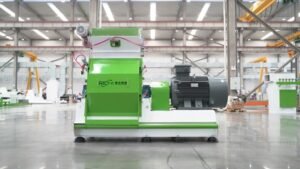
Hammer mills reduce particle size to improve mixing uniformity and pellet durability.
Batching
Computer-controlled weighing systems accurately proportion each ingredient according to the feed formula.
Mixing
High-efficiency mixers ensure vitamins, minerals, proteins, and grains are evenly distributed.
Conditioning
Steam conditioning increases moisture and temperature before pelleting, improving pellet quality and digestibility.
Pelleting
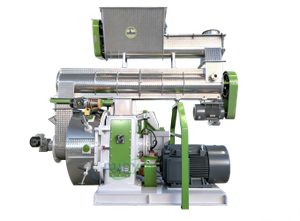
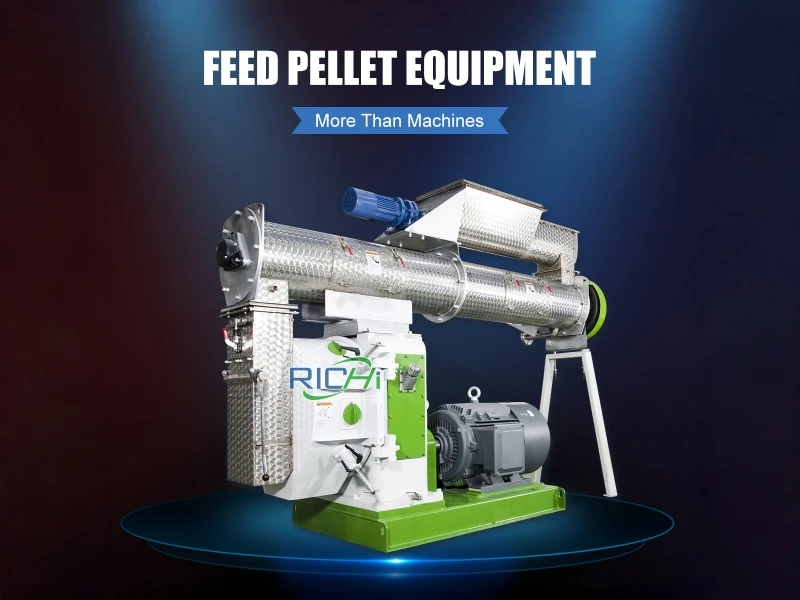
The pellet mill compresses the conditioned mash into uniform feed pellets.
Cooling
Counterflow coolers stabilize pellet temperature and reduce moisture.
Screening
Fine particles are separated and returned to production.
Packaging
Finished feed is weighed, bagged, sealed, and prepared for storage or shipment.
Each production stage directly influences final feed quality.
Energy Efficiency Is Becoming a Competitive Advantage
Electricity often represents one of the largest operating expenses in feed manufacturing.
Modern engineering focuses on reducing unnecessary power consumption through:
- High-efficiency motors
- Optimized airflow systems
- Reduced material transportation distance
- Intelligent automation
- Variable frequency drives
- Efficient dust collection
- Proper equipment matching
Lower energy consumption improves profitability over the entire lifespan of the production line.
Feed Quality Starts Long Before Pelleting
Many beginners believe pellet quality depends only on the pellet mill.
In reality, pellet durability begins much earlier.
Consistent grinding creates uniform particle size.
Accurate batching ensures balanced nutrition.
Effective mixing distributes nutrients evenly.
Proper conditioning softens raw materials before compression.
Stable cooling prevents pellet cracking.
When every stage performs correctly, the final pellets exhibit excellent hardness, durability, appearance, and nutritional consistency.
Choosing the Right Production Capacity
Not every investment requires a massive industrial facility.
Production capacity should match local market demand, available raw materials, labor availability, and investment budget.
Smaller regional feed producers often achieve excellent profitability with medium-capacity production lines that offer lower investment risk while maintaining room for future expansion.
One popular option for growing poultry businesses is the 3-4 T/H chicken feed manufacturing plant solution, which provides sufficient production capacity for commercial feed supply while remaining manageable in terms of investment and operating costs.
This capacity range frequently balances production efficiency with financial flexibility, making it attractive for expanding agricultural enterprises.
Digital Automation Is Changing Feed Manufacturing
Modern feed plants increasingly rely on digital control systems.
Operators can monitor:
- Raw material inventory
- Formula management
- Production scheduling
- Equipment status
- Motor loads
- Steam consumption
- Production reports
- Alarm systems
- Maintenance reminders
Automation minimizes human error while improving production traceability.
These technologies also make staff training easier because production parameters are standardized across different operating shifts.
Flexibility Creates Long-Term Business Value
Feed demand rarely remains constant.
A production line capable of manufacturing multiple feed products creates greater business resilience.
For example, a facility may produce:
- Broiler starter feed in the morning
- Layer feed in the afternoon
- Pig feed in the evening
Seasonal demand can also change throughout the year.
Flexible production systems allow manufacturers to respond quickly without purchasing entirely new equipment.
Maintenance Should Never Be Overlooked
Reliable production depends on preventive maintenance rather than emergency repairs.
Important maintenance practices include:
- Regular die inspection
- Roller adjustment
- Bearing lubrication
- Belt replacement
- Dust removal
- Motor inspection
- Electrical system checks
- Calibration of weighing equipment
Routine maintenance reduces unexpected downtime while extending equipment lifespan.
Why Engineering Experience Matters
Every feed mill project is unique.
Available raw materials differ from country to country.
Climate affects moisture control.
Local electricity standards vary.
Customer product requirements also differ considerably.
For these reasons, experienced engineering teams often customize production lines instead of offering identical equipment packages to every customer.
Proper project planning frequently delivers higher returns than simply purchasing larger machines.
Sustainable Manufacturing Is Becoming Essential
Environmental regulations continue to become stricter worldwide.
Modern feed plants increasingly integrate sustainable technologies, including:
- Dust recovery systems
- Noise reduction
- Efficient steam utilization
- Waste recycling
- Energy-saving motors
- Automated material handling
These improvements benefit both regulatory compliance and operating profitability.
Sustainability has become a practical business strategy rather than simply an environmental objective.
Planning Before Purchasing
Before investing in any production line, investors should carefully evaluate several questions.
- What feed products will be manufactured?
- Which raw materials are locally available?
- What daily production volume is required?
- Will production expand within five years?
- How much automation is needed?
- What packaging formats will customers require?
- How much factory space is available?
- What utilities are already installed?
Clear answers allow engineers to recommend the most suitable production configuration rather than an oversized or undersized solution.
Partnering With an Experienced Equipment Supplier
The most successful feed manufacturing projects typically involve close collaboration between investors and experienced equipment providers from the earliest planning stages.
Rather than focusing solely on machine specifications, professional suppliers analyze production goals, raw material characteristics, future expansion plans, and local market conditions before recommending a complete solution.
Companies such as Richi Pellet Mill provide comprehensive engineering services that include plant layout design, equipment selection, installation guidance, commissioning support, operator training, and long-term technical assistance. This integrated approach helps reduce project risks while improving production efficiency throughout the life of the facility.
For investors evaluating customized feed manufacturing projects or seeking technical advice, Learn More Here to explore practical solutions, engineering expertise, and successful feed mill case studies that can support informed investment decisions.
Final Thoughts
Building a successful feed manufacturing business requires much more than purchasing machines. Long-term profitability comes from careful planning, optimized production processes, reliable engineering, intelligent automation, and equipment that matches both current and future business needs.
Whether producing poultry, livestock, or specialty animal feed, selecting the right animal feed mill equipment for sale is only the beginning. When combined with professional plant design, efficient production workflows, and scalable engineering solutions like the 3-4 T/H chicken feed manufacturing plant solution, manufacturers can achieve higher productivity, better feed quality, and stronger competitiveness in an increasingly demanding global market.
Ultimately, investing in complete solutions instead of isolated equipment creates a stronger foundation for sustainable growth, consistent product quality, and long-term success in the feed manufacturing industry.
(Related Post: https://www.richipelletmill.com/rabbit-pellet-making-machine/ )