The animal feed industry has undergone tremendous changes over the past decade. Rising feed demand, increasing labor costs, and fierce competition have forced manufacturers to seek more efficient production methods. Instead of relying on traditional systems, investors are now focusing on intelligent, flexible, and scalable feed factories that can adapt to future market needs.
Whether supplying poultry farms, aquaculture businesses, or integrated farming operations, feed manufacturers need stable equipment and efficient management systems to remain competitive. As a result, many producers are investing in a modern poultry feed production line capable of delivering consistent quality and high productivity.
What Is Driving the Growth of Feed Manufacturing?
Global demand for animal protein continues to increase. Poultry meat remains one of the most affordable and widely consumed protein sources. At the same time, aquaculture production has expanded rapidly, creating new opportunities for feed manufacturers.
Several factors are supporting industry growth:
- Population growth.
- Rising incomes.
- Expansion of commercial farming.
- Increased demand for high-quality feed.
- Greater awareness of animal nutrition.
These trends make feed production a promising industry with long-term development potential.
Why Feed Quality Matters More Than Ever
Modern farming operations require feed that delivers predictable performance. High-quality pellets help improve feed conversion ratios and animal growth rates.
Good feed should provide:
- Uniform pellet size.
- Balanced nutrition.
- High digestibility.
- Better palatability.
- Reduced feed waste.
Producing such feed requires advanced equipment and precise control throughout the manufacturing process.
The Main Stages of Feed Production
Raw Material Receiving
Ingredients such as corn, soybean meal, wheat bran, vitamins, and minerals are stored separately to maintain quality.
Grinding
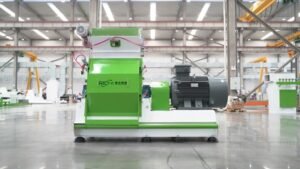
Hammer mills reduce particle size and improve ingredient digestibility.
Mixing
Accurate mixing ensures every pellet contains balanced nutrients.
Conditioning
Steam conditioning improves pellet durability and nutrient absorption.
Pelleting
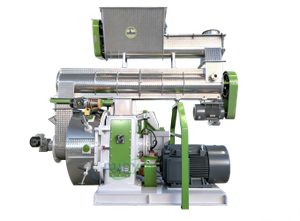
The pellet mill compresses mixed materials into finished feed pellets.
Cooling and Screening
Cooling stabilizes moisture levels while screening removes fines and dust.
Packing
Automatic packing systems improve efficiency and reduce labor requirements.
Can One Factory Produce Different Types of Feed?
This is one of the most frequently asked questions from investors.
The answer is yes.
Modern factories are no longer limited to a single product. With proper engineering and equipment design, manufacturers can produce:
- Broiler feed.
- Layer feed.
- Duck feed.
- Goose feed.
- Fish feed.
- Shrimp feed.
- Livestock feed.
Such flexibility increases equipment utilization and creates additional revenue opportunities.
Expanding Into Aquaculture Markets
Fish farming has become one of the fastest-growing agricultural sectors. Demand for floating and sinking fish feed continues to rise in many countries.
By incorporating a 2 tph fish feed pellet making machine, feed manufacturers can serve aquaculture customers without constructing an entirely separate factory.
This approach offers several benefits:
Increased Revenue
Additional products create new income streams.
Reduced Market Risks
Diversification protects against fluctuations in poultry markets.
Better Equipment Utilization
Facilities can operate throughout the year.
Stronger Competitive Advantages
Manufacturers can serve a wider range of customers.
Automation Is Changing Production Efficiency
Intelligent control systems have transformed modern feed factories.
Automatic systems can manage:
- Ingredient batching.
- Material conveying.
- Mixing.
- Pelleting.
- Cooling.
- Packaging.
Advantages include:
Lower Labor Costs
Automation reduces dependence on manpower.
Higher Accuracy
Computerized systems improve formula consistency.
Stable Production
Equipment operates more efficiently and continuously.
Better Traceability
Production data can be recorded and analyzed.
Smart factories are becoming the new industry standard.
Energy Efficiency Has Become a Priority
Electricity expenses account for a significant portion of feed production costs.
Modern equipment helps reduce energy consumption through:
- High-efficiency motors.
- Variable frequency drives.
- Optimized cooling systems.
- Intelligent control software.
Lower energy consumption improves profitability and sustainability.
Over the life cycle of a project, these savings can be substantial.
How Should Investors Choose Equipment?
Many buyers focus only on machine prices, but successful projects require a broader perspective.
Important factors include:
Engineering Experience
Experienced suppliers understand different feed formulas and production requirements.
Equipment Reliability
High-quality components increase machine life.
Technical Support
Professional guidance ensures smooth installation and operation.
Spare Parts Availability
Quick access to spare parts minimizes downtime.
Expansion Possibilities
Modular designs simplify future upgrades.
Long-term support is often more valuable than the lowest price.
Turnkey Solutions Simplify Investments
Many companies prefer complete engineering services instead of purchasing individual machines separately.
Turnkey projects typically include:
- Factory layout design.
- Equipment manufacturing.
- Installation supervision.
- Commissioning.
- Staff training.
- After-sales support.
Comprehensive solutions save time and reduce risks.
Numerous feed producers around the world have worked with pellet mill suppliers that provide integrated project services and customized designs.
Environmental Protection Is No Longer Optional
Modern feed plants must comply with increasingly strict environmental regulations.
Common solutions include:
- Dust collection systems.
- Noise reduction devices.
- Energy-saving motors.
- Waste recycling technologies.
These measures improve working conditions and reduce environmental impact.
Sustainable production also enhances corporate reputation.
Digital Technologies Are Transforming Feed Plants
The future of feed manufacturing lies in intelligent systems.
Emerging technologies include:
Remote Monitoring
Managers can supervise operations from anywhere.
Predictive Maintenance
Sensors identify problems before equipment failures occur.
Data Analysis
Production data helps optimize performance.
Cloud Management
Information becomes easier to access and manage.
Digital transformation improves both efficiency and profitability.
Common Investment Mistakes
Oversized Capacity
Excessive investment increases financial pressure.
Neglecting Raw Material Supply
Stable ingredient availability is essential.
Choosing Cheap Equipment
Low-cost machines often lead to expensive maintenance.
Lack of Technical Training
Well-trained operators maximize production efficiency.
Avoiding these mistakes significantly improves project success.
Looking Toward the Future
As global demand for poultry and aquaculture products continues to rise, feed manufacturers must adopt more efficient production technologies.
A modern poultry feed production line provides flexibility, stable quality, and excellent long-term returns. Combined with diversification strategies and intelligent automation, feed companies can build sustainable businesses capable of adapting to future market changes.
If you are researching feed equipment or exploring investment opportunities, you may want to read this explanation for additional technical insights and practical recommendations before making your next decision.
Related Post:https://pelletizerequipment.com/animal-feed-production-line/