下面是一篇约 2000 词的英文 SEO 文章,重点分析影响秸秆颗粒质量的原料、含水率、粒度、制粒压力、模具压缩比、压辊、冷却、筛分和储存等因素,并自然加入 straw pellet mill for sale 这一关键词。
What Factors Affect Straw Pelletizing Quality
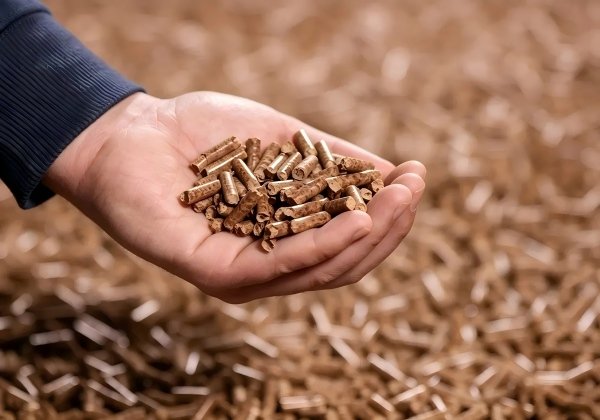
Straw pelletizing is a widely used method for converting agricultural residues into compact biomass pellets. Wheat straw, rice straw, corn stalks, barley straw, oat straw, sorghum stalks, and other crop residues can be processed into pellets for biomass fuel applications when the raw material and production conditions are properly controlled.
However, producing good-quality straw pellets is not simply a matter of feeding agricultural waste into a pellet mill. Straw is a fibrous material with variable moisture, particle size, density, and chemical composition. Differences in harvesting, storage, and preparation can significantly affect pellet formation and final product quality.
During pellet production, the straw must pass through several stages, including cleaning, shredding, drying, grinding, feeding, pelletizing, cooling, screening, and storage. Each stage can influence the strength, density, durability, appearance, and stability of the finished pellets.
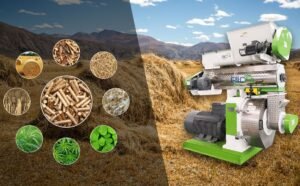
For companies searching for a straw pellet mill for sale, understanding these quality factors is particularly important. A suitable pellet mill is essential, but the machine must also be matched with the characteristics of the raw material and the requirements of the complete production line.
This article explains the major factors that affect straw pelletizing quality and provides practical guidance for producing more consistent biomass pellets.
What Is Straw Pellet Quality?
Straw pellet quality refers to the physical and fuel characteristics of pellets produced from agricultural residues.
Depending on the intended application, important quality indicators may include:
- Pellet density
- Mechanical durability
- Pellet hardness
- Moisture content
- Percentage of fines
- Pellet diameter
- Pellet length
- Appearance
- Ash content
- Calorific value
- Storage stability
The exact quality requirements depend on the end use and applicable fuel specifications.
For biomass fuel, pellets should generally be sufficiently durable for transportation and handling while maintaining suitable combustion characteristics.
A pellet that looks good immediately after production may not necessarily remain stable during transportation or storage. Therefore, quality should be evaluated throughout the entire production chain.
1. Straw Type Affects Pellet Quality
The first factor is the type of agricultural straw being processed.
Different crops have different fiber structures and chemical compositions.
Common straw materials include:
- Wheat straw
- Rice straw
- Corn stalks
- Barley straw
- Oat straw
- Sorghum stalks
- Cotton stalks
- Rapeseed straw
Some straw contains relatively long and tough fibers, while other materials are easier to grind and compress.
The natural lignin content and other structural components also influence how particles bond during pelletizing.
For this reason, a pellet mill configuration suitable for wheat straw may not automatically produce identical results with rice straw or corn stalks.
Before designing a production line, the raw material should be tested.
2. Moisture Content Is Critical
Moisture is one of the most important factors affecting straw pelletizing quality.
If the straw contains excessive moisture, the material may become difficult to compress effectively.
Possible problems include:
- Soft pellets
- Poor pellet formation
- Low density
- Increased fines
- Unstable feeding
- Difficult cooling
- Storage problems
On the other hand, excessively dry material may also cause difficulties.
Very dry straw can generate more dust and may not form stable pellets under certain operating conditions.
The objective is therefore to maintain a suitable and stable moisture condition rather than simply reducing moisture as much as possible.
Why Moisture Affects Binding
During pelletizing, mechanical pressure and friction generate heat inside the compression zone.
This heat can help soften natural binding components such as lignin.
Moisture also influences how particles deform and move through the die.
If the moisture level is outside the appropriate operating range, the material may not form stable pellets.
Therefore, moisture should be controlled before pelletizing and monitored during production.
3. Drying Efficiency Influences Pellet Quality
When straw arrives with excessive moisture, a dryer may be required.
A rotary dryer is commonly used in commercial biomass pellet production.
The drying system should be matched to:
- Initial moisture
- Target moisture
- Straw throughput
- Heat source
- Particle size
- Local environmental conditions
An undersized dryer can become a production bottleneck.
An oversized or poorly controlled dryer can waste thermal energy and potentially over-dry the material.
Stable drying is therefore more important than simply achieving a high drying temperature.
4. Particle Size Affects Pellet Formation
Particle size has a direct influence on pellet quality.
Straw must normally be shredded and ground before entering the pellet mill.
If particles are too large, they may not compress evenly.
Large fibers can also cause:
- Poor feeding
- Die blockage
- Uneven pellet density
- Increased pellet breakage
- Unstable production
However, excessive grinding is not always beneficial.
Very fine particles require more electricity and can increase dust generation.
The objective is to achieve a suitable particle size distribution for the selected pellet mill and pellet diameter.
Why Particle Uniformity Matters
A consistent particle size allows the material to enter the compression chamber more evenly.
This helps maintain stable feeding and consistent compression.
A mixture containing extremely large fibers and very fine powder may behave differently from a material with a more uniform particle distribution.
Therefore, grinding should focus on producing suitable and consistent particles rather than simply achieving the smallest possible size.
5. Fiber Length Must Be Controlled
Straw differs from many woody biomass materials because it contains long and flexible fibers.
If the fibers are too long, they can wrap around moving components or form bridges inside the hopper.
Long fibers can also reduce feeding stability.
A straw shredder is often installed before the hammer mill to shorten the material.
Proper fiber length improves:
- Feeding
- Grinding
- Mixing
- Compression
- Pellet consistency
The ideal fiber length depends on the specific straw and pellet mill design.
6. Contamination Can Reduce Pellet Quality
Agricultural residues may contain soil, sand, stones, metal, plastic, and other foreign materials.
These contaminants can affect both pellet quality and equipment life.
For example, soil and sand can increase ash content in the final fuel.
Metal can damage grinders and pellet mills.
Plastic and other foreign materials may contaminate the finished product.
Therefore, cleaning should be considered an important part of the straw pellet production process.
Magnetic separators can remove ferrous metal, while screening and other cleaning equipment can help remove larger contaminants.
7. Die Compression Ratio Affects Pellet Quality
The die is one of the most important components in a straw pellet mill.
When rollers press straw through the die holes, the material experiences compression and friction.
The die compression ratio influences the resistance encountered by the biomass.
Different straw types require different compression conditions.
An unsuitable compression ratio may result in:
- Weak pellets
- Excessive energy consumption
- Low output
- Die blockage
- Excessive roller pressure
- Increased wear
For this reason, die selection should be based on the raw material and desired pellet diameter.
How Compression Affects Pellet Density
Higher compression can increase the density of the pellet, but simply increasing compression is not always the best solution.
If the resistance becomes excessive, motor load and component wear may increase.
The goal is to find a compression condition that produces sufficiently durable pellets without creating unnecessary mechanical resistance.
8. Pellet Diameter Influences Quality
Pellet diameter is another important consideration.
Common biomass fuel pellet sizes include 6 mm and 8 mm, although other diameters can be produced depending on the machine and application.
The selected diameter affects:
- Compression conditions
- Production capacity
- Cooling behavior
- Fuel feeding
- Transportation
- Customer requirements
Smaller pellets may require different compression conditions than larger pellets.
Therefore, pellet diameter should be determined before selecting the die.
9. Roller Condition Affects Compression
The rollers work together with the die to compress the straw.
If roller surfaces are worn, the machine may not maintain the same compression conditions.
Possible consequences include:
- Reduced production capacity
- Uneven pellet quality
- Increased fines
- Higher electricity consumption
- Unstable material flow
Regular inspection is therefore essential.
The roller surface, bearings, and adjustment should be checked according to the pellet mill manufacturer’s maintenance requirements.
10. Die Condition Affects Pellet Quality
A worn die can also influence pellet quality.
As die holes wear, their effective geometry may change.
This can affect material resistance and compression.
Operators should monitor:
- Die hole condition
- Die surface
- Cracks
- Wear
- Blockage
- Production changes
If output decreases or pellet quality becomes unstable despite stable raw material conditions, die condition should be investigated.
11. Feeding Rate Must Be Stable
Stable feeding is essential for consistent pellet quality.
If too much straw enters the pellet mill at once, the motor may become overloaded.
If the feeding rate is too low, production capacity is not fully utilized.
Uneven feeding can also produce fluctuating compression conditions.
A stable feeding system may include:
- Feed hopper
- Screw feeder
- Belt conveyor
- Variable-frequency drive
- Level sensor
- Automatic feeding control
For larger production lines, automatic feeding can help maintain a more consistent material flow.
12. Conditioning Can Improve Pellet Formation
Depending on the raw material and process design, conditioning may be used before pelletizing.
Water or steam can be introduced to adjust moisture and temperature.
Conditioning can help improve particle interaction and may support more stable pellet formation.
However, conditioning parameters must be controlled carefully.
Excessive moisture can cause soft pellets, while insufficient conditioning may not provide the intended effect.
The appropriate process should be determined through testing.
13. Pellet Mill Operating Speed Matters
The operating speed of the pellet mill can influence production performance and pellet quality.
If the machine operates outside its appropriate range, material residence time and compression conditions can change.
The ideal speed depends on:
- Pellet mill model
- Die design
- Straw characteristics
- Motor configuration
- Production capacity
- Pellet diameter
Operators should follow the manufacturer’s recommended operating parameters rather than continuously increasing speed to achieve higher output.
(learn more:https://richipelletizer.com/straw-pellet-machine-for-sale/)
14. Cooling Is Essential for Pellet Stability
Freshly produced straw pellets are hot and may contain residual moisture.
They should be cooled before packaging or long-term storage.
A pellet cooler removes heat and helps stabilize the pellets.
Insufficient cooling can lead to:
- Soft pellets
- Increased breakage
- Condensation
- Storage problems
- Higher fines
A properly sized counterflow cooler can provide effective cooling for commercial production lines.
Cooling capacity should be matched to the output of the pellet mill.
15. Screening Affects the Final Product
Even well-produced pellets may contain some fines and broken pieces.
A screening machine separates these materials from finished pellets.
Effective screening improves product consistency.
The separated fines can often be recycled into the pelletizing process.
This can reduce material loss and improve raw material utilization.
The screen should be selected according to pellet diameter, capacity, and required product specifications.
16. Pellet Handling Can Cause Breakage
Pellets can break after they leave the pellet mill.
Excessive impact during conveying, cooling, screening, and packaging can increase the percentage of fines.
Therefore, material transfer should be designed carefully.
Conveyors should avoid unnecessary drops and excessive impact.
This is especially important for commercial biomass fuel plants where pellets may pass through multiple transportation stages before reaching the final customer.
17. Storage Conditions Influence Pellet Quality
Pellet quality does not stop at the packaging machine.
Storage conditions can significantly affect the final product.
Biomass pellets can absorb moisture from the surrounding environment.
If stored in humid conditions, pellets may:
- Lose hardness
- Swell
- Break apart
- Generate more fines
- Develop storage problems
Finished pellets should therefore be stored in a dry and protected environment.
Packaging materials should also provide adequate moisture protection for the intended storage period.
18. Raw Material Storage Matters
The condition of the straw before pelletizing is also important.
If straw is stored outdoors without adequate protection, it may absorb rainwater and environmental moisture.
Poor storage can also introduce soil, mold, and other contaminants.
A well-managed raw material storage area should protect straw from:
- Rain
- Groundwater
- Excessive humidity
- Soil contamination
- Unnecessary foreign materials
Stable raw material quality makes downstream pellet production easier to control.
19. Pellet Mill Maintenance Affects Quality
Regular maintenance is essential for maintaining consistent pellet quality.
The pellet mill should be inspected for:
- Roller wear
- Die wear
- Bearing condition
- Gearbox condition
- Lubrication
- Motor load
- Vibration
- Temperature
A machine that is mechanically healthy can maintain more stable operating conditions.
Preventive maintenance can also reduce unexpected downtime.
20. Lubrication Influences Machine Stability
The bearings and transmission components of a pellet mill require proper lubrication.
Insufficient lubrication can increase friction and temperature.
It may also shorten component life.
Automatic lubrication systems can be useful for larger industrial pellet mills.
However, automated lubrication should still be monitored to ensure that the system is functioning correctly.
21. Pellet Quality Depends on the Entire Production Line
One of the most important principles in straw pellet production is that pellet quality cannot be determined by the pellet mill alone.
Consider a production line where the pellet mill is technically capable of producing high-quality pellets.
If the dryer produces inconsistent moisture, the pellet quality will fluctuate.
If the grinder produces oversized particles, compression may become unstable.
If the feeder provides irregular material flow, pellet density may vary.
If the cooler is too small, pellets may remain hot and soft.
Therefore, the complete line should be designed as an integrated system.
A typical process may include:
Straw Receiving → Cleaning → Bale Breaking → Shredding → Drying → Grinding → Feeding → Pelletizing → Cooling → Screening → Packaging
How to Choose a Straw Pellet Mill for Sale
When searching for a straw pellet mill for sale, buyers should consider more than machine price.
A suitable pellet mill should match the actual production conditions.
Raw Material Compatibility
The machine should be designed or configured for the specific straw being processed.
Wheat straw, rice straw, corn stalks, and other materials may require different processing conditions.
Capacity
Determine the required production capacity based on available raw material and market demand.
The rated capacity of a pellet mill may vary depending on material properties.
Pellet Size
Select the required pellet diameter before choosing the die.
Die Compression Ratio
Make sure the die is suitable for the straw type and desired pellet specifications.
Motor and Power Requirements
Power consumption should be evaluated together with expected output.
A machine with a larger motor is not automatically more efficient.
Roller and Die Materials
Wear-resistant components can help maintain stable performance when processing abrasive biomass.
Automation
Larger plants may benefit from automatic feeding, lubrication, overload protection, monitoring, and centralized control.
Maintenance
Easy access to rollers, dies, bearings, and other wear components can simplify maintenance.
Complete Line Compatibility
The pellet mill should work effectively with the upstream dryer and grinder and downstream cooler, screen, and packaging equipment.
How Can Pellet Quality Be Improved?
A systematic approach can significantly improve straw pellet quality.
Control Moisture
Maintain stable moisture before pelletizing.
Optimize Particle Size
Use sufficient grinding without unnecessary over-grinding.
Reduce Fiber Length
Shred long straw fibers before fine grinding.
Select the Correct Die
Match compression conditions to the raw material.
Maintain Rollers and Dies
Inspect wear components regularly.
Stabilize Feeding
Use an appropriate feeding system and avoid sudden changes.
Cool Properly
Do not package hot pellets directly after production.
Screen Finished Pellets
Remove fines and broken particles.
Protect Finished Pellets
Keep pellets dry during storage and transportation.
Common Straw Pellet Quality Problems
Weak Pellets
Weak pellets can result from unsuitable moisture, insufficient compression, poor particle preparation, or incorrect die specifications.
Excessive Fines
High fines may be caused by poor pellet formation, insufficient cooling, excessive handling, or worn components.
Uneven Pellet Size
Uneven pellet size can result from inconsistent cutting, unstable compression, or irregular feeding.
Die Blocking
Die blockage may occur when moisture, particle size, feeding rate, or compression conditions are unsuitable.
Low Pellet Density
Low density may be related to insufficient compression, inappropriate moisture, or unsuitable particle preparation.
High Energy Consumption
Excessive electricity consumption may result from over-grinding, excessive die resistance, poor machine condition, or inefficient operation.
How Does Straw Pellet Quality Affect Fuel Performance?
Pellet quality has a direct relationship with handling and fuel performance.
Higher durability can reduce the amount of fines generated during transportation.
Consistent dimensions can improve automated feeding.
Appropriate moisture helps maintain stable storage conditions.
Fuel properties such as ash content and calorific value also matter for combustion applications.
However, fuel quality should be evaluated according to the intended combustion system and applicable specifications.
For example, agricultural residues can have different ash and mineral characteristics from woody biomass. Therefore, end users should verify that the pellets are suitable for their specific boiler, furnace, or heating system.
Why Raw Material Testing Is Important
Raw material testing can help predict how a particular straw will behave during pelletizing.
Tests may evaluate:
- Moisture
- Particle size
- Bulk density
- Pellet durability
- Pellet density
- Ash content
- Calorific value
- Production capacity
- Electricity consumption
Testing is especially valuable before investing in a large commercial pellet plant.
The results can help determine:
- Dryer capacity
- Grinding requirements
- Die specifications
- Pellet mill capacity
- Cooling requirements
- Expected product quality
Designing a Complete Straw Pellet Production Line
A commercial straw pellet project should consider the entire process.
A typical line may include:
Raw Material Section
Straw receiving, storage, cleaning, and bale breaking.
Pretreatment Section
Shredding and contaminant removal.
Drying Section
Moisture reduction and control.
Grinding Section
Fine grinding to achieve the required particle size.
Pelletizing Section
Pellet mill, feeding system, and related control equipment.
Cooling Section
Pellet cooling and moisture stabilization.
Screening Section
Removal and recycling of fines.
Packaging Section
Automatic weighing and bagging or bulk loading.
Dust Collection and Electrical Control
Dust management and centralized equipment control.
The equipment should be matched according to the actual capacity and raw material characteristics.
(click to investigate:RICHI Pelletizer)
Final Checklist for Straw Pellet Quality
Before starting commercial production, operators can check the following:
Raw Material
- Is the straw clean?
- Is moisture consistent?
- Are long fibers reduced?
- Is contamination controlled?
Grinding
- Is particle size suitable?
- Is grinding consistent?
- Is excessive grinding avoided?
Pellet Mill
- Is the die suitable?
- Are rollers properly adjusted?
- Is feeding stable?
- Is motor load within the recommended range?
Cooling
- Are pellets sufficiently cooled?
- Is residual moisture controlled?
Screening
- Is the fines level acceptable?
- Are fines recycled efficiently?
Storage
- Are finished pellets protected from moisture?
- Are bags or bulk storage systems suitable?
Maintenance
- Are rollers and dies inspected?
- Are bearings lubricated?
- Are abnormal temperature and vibration monitored?
Conclusion
Straw pelletizing quality is influenced by a combination of raw material properties, pretreatment conditions, pellet mill parameters, cooling, screening, handling, and storage.
The most important factors include straw type, moisture content, particle size, fiber length, contamination, die compression ratio, roller condition, feeding stability, pellet mill operation, cooling efficiency, screening, and storage conditions.
For buyers looking for a straw pellet mill for sale, selecting the machine should be only one part of the decision-making process. The pellet mill must be matched with the raw material, production capacity, pellet diameter, die specifications, and the supporting equipment in the complete production line.
Good pellet quality begins before the straw reaches the pellet mill. Proper cleaning, shredding, drying, and grinding create the conditions needed for stable compression. During pelletizing, the die, rollers, feeding rate, and operating parameters determine how effectively the material is compressed. After pelletizing, cooling, screening, transportation, and storage determine whether the pellets retain their quality.
Therefore, the most reliable way to produce high-quality straw pellets is to optimize the entire process rather than focusing on a single machine.
With appropriate raw material preparation, stable moisture control, suitable particle size, correct die selection, reliable pelletizing equipment, effective cooling, and proper maintenance, agricultural residues can be converted into durable and consistent biomass pellets suitable for compatible fuel applications.