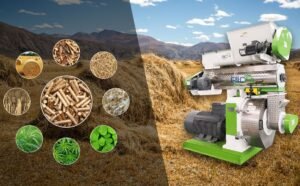
Agriculture produces enormous quantities of fibrous materials every year. Some become animal feed, some return to the soil, and others are burned, discarded, or left unused. Yet many of these materials contain valuable organic matter and can be processed into denser products.
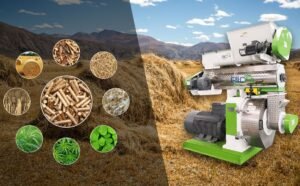
Hay, wheat straw, rice straw, sugarcane bagasse, corn stalks, and similar residues are attracting attention because they can potentially be converted into pellets for livestock feeding, biomass applications, bedding, and other uses.
The idea sounds straightforward: collect the material, compress it, and produce pellets.
In practice, successful pellet production requires much more thought.
The quality of the raw material, its moisture content, fiber length, storage condition, production capacity, and final application all influence the process. A well-designed system must also coordinate grinding, conveying, pelletizing, cooling, screening, and packaging.
For agricultural businesses, understanding these factors can be more valuable than simply comparing machine prices.
Why Are Agricultural Residues Interesting?
The first advantage is availability.
Unlike specialized industrial feedstocks, agricultural residues are often generated as part of existing farming operations. Wheat straw is produced after grain harvesting. Rice straw remains after rice production. Sugarcane processing generates bagasse. Hay and forage are produced as part of livestock operations.
The challenge is that these materials are often bulky.
A truck carrying loose straw may quickly reach its volume limit while carrying relatively little actual dry matter. Storage facilities also need considerable space.
Pelletizing changes the physical form of the material.
By compressing fibers into a standardized product, producers can reduce bulk and make the material easier to handle with mechanical equipment.
This can create value through both the finished product and improved logistics.
The Difference Between Available Material and Usable Material
A region may appear to have an enormous supply of agricultural residue, but not all of it is realistically available for pellet production.
Some material may already be used as animal bedding. Some may remain in the field for soil management. Some may be too contaminated with soil or foreign materials. Other quantities may be too far from the proposed processing plant.
Therefore, project planning should distinguish between:
Theoretical supply
and
Economically recoverable supply
This distinction is critical.
A pellet plant needs a dependable feedstock supply, not merely a large number on a regional agricultural report.
Before investing in equipment, operators should estimate how much suitable material can actually be collected, transported, and delivered to the facility.
Hay as a Pellet Feedstock
Hay is particularly interesting because it already has an established role in livestock feeding.
A hay pellet machine can compress appropriately prepared forage into a compact product that may be easier to store and distribute than loose hay.
The characteristics of the hay still matter.
Leafy alfalfa, coarse grass hay, mixed forage, and other materials may require different preparation conditions.
Important variables include:
- Moisture
- Fiber length
- Leaf-to-stem ratio
- Plant maturity
- Bulk density
- Storage condition
- Foreign material
For this reason, the same pelletizing settings should not automatically be applied to every hay source.
What Happens Before Pelletizing?
The pellet mill is only one stage of the process.
A typical system may begin with:
Receiving → cleaning → grinding → moisture adjustment → feeding → pelletizing
Each stage prepares the material for the next.
Cleaning removes unwanted materials.
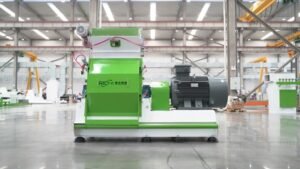
Grinding reduces excessive fiber length.
Moisture adjustment helps create more stable processing conditions.
The feeder controls how consistently material enters the pellet mill.
This sequence is particularly important when processing fibrous agricultural materials because they do not always flow as easily as grain or other free-flowing ingredients.
Why Fiber Length Matters
Long fibers can create several mechanical problems.
They may bridge inside hoppers, wrap around moving components, or enter the pellet mill unevenly.
Grinding helps reduce these problems.
However, grinding should be optimized rather than maximized.
Very fine particles require additional energy and may create more dust. The ideal particle size depends on the raw material and intended pellet diameter.
Therefore, grinding should be considered a preparation step, not an end in itself.
Moisture: The Variable That Changes Everything
Two batches of apparently identical straw can behave differently if their moisture levels are different.
Moisture affects grinding, conveying, compression, pellet durability, cooling, and storage.
If material is too wet, it may become difficult to process consistently. If it is too dry, pellet formation may become less stable under certain conditions.
For commercial operations, moisture measurement should be part of normal process control.
Instead of treating moisture as a one-time test, producers can monitor it at several stages and adjust the process when necessary.
This approach becomes particularly important in regions where weather conditions change significantly during harvest periods.
Does Every Project Need Industrial Drying?
No.
The decision to install a dryer should be based on the actual feedstock.
If hay or straw is already sufficiently dry, additional drying may not provide enough benefit to justify the extra investment and energy consumption.
If incoming material has excessive moisture, however, drying may become essential.
Dryer selection should consider:
- Initial moisture
- Required final moisture
- Production capacity
- Material properties
- Available heat source
- Local climate
- Space limitations
A properly sized drying system can stabilize production, but an oversized dryer can unnecessarily increase operating costs.
How Should Production Capacity Be Determined?
Capacity should be connected to feedstock supply.
Consider a farm cooperative with access to 20 tons of usable straw per day.
A machine designed to process 8 tons per hour may appear attractive, but if the facility only receives 20 tons daily, it cannot operate at full capacity for long.
A smaller machine may achieve better annual utilization.
Conversely, a commercial residue collection company with hundreds of tons available every week may require a much larger system.
This is why capacity planning should begin with:
Daily feedstock supply + annual operating days + desired utilization + future growth
rather than simply selecting the largest available machine.
Different Residues Need Different Strategies
Wheat straw, rice straw, hay, and bagasse may all be described as fibrous agricultural materials, but their processing behavior is not identical.
Wheat straw can contain relatively long fibers and may require effective size reduction.
Rice straw may require particular attention to ash and mineral characteristics.
Bagasse can arrive with significant moisture depending on the sugar-processing process.
Hay can vary according to plant species, maturity, and storage condition.
For this reason, a 0.5-8 T/H wheat straw pellet machine for sale should not be evaluated solely by its capacity range. Buyers should determine whether its configuration matches the specific material and project conditions.
Why Local Raw Materials Often Make Better Projects
Transportation can determine whether a residue pellet project is economically practical.
Loose agricultural materials are expensive to transport over long distances because of their low bulk density.
Processing the material near the source can improve this situation.
Instead of moving loose straw hundreds of kilometers, producers can densify it closer to the farms and transport a more compact product.
This is one reason regional pellet plants can be attractive in areas with concentrated agricultural production.
A suitable site should ideally balance:
- Feedstock availability
- Road access
- Electricity
- Heat or fuel availability
- Labor
- Storage space
- Customer proximity
Location is therefore part of equipment planning.
Can a Pellet Plant Process More Than One Material?
A flexible plant may be able to process different agricultural residues, but flexibility requires appropriate design.
The system may need adjustable:
- Grinder settings
- Feeding rates
- Moisture control
- Die specifications
- Operating parameters
- Storage arrangements
For example, a facility might process hay during one season and wheat straw after harvest.
This can increase annual equipment utilization, provided that sufficient quantities of each material are available.
However, operators should not assume that switching materials requires no adjustments.
Each feedstock should be tested and the production parameters optimized accordingly.
Why Pellet Quality Is a System Result
Pellet durability is often associated with the pellet mill, but the final result depends on the entire process.
Particle size, moisture, formulation, die compression, roller adjustment, feeding consistency, and cooling can all influence pellet quality.
Suppose pellets are breaking apart after packaging.
The problem might be:
- Incorrect moisture
- Poor grinding
- Inadequate compression
- Improper die selection
- Excessive production rate
- Insufficient cooling
Replacing the pellet mill without investigating the upstream and downstream process may not solve the issue.
This is why experienced project planning looks at the complete material flow.
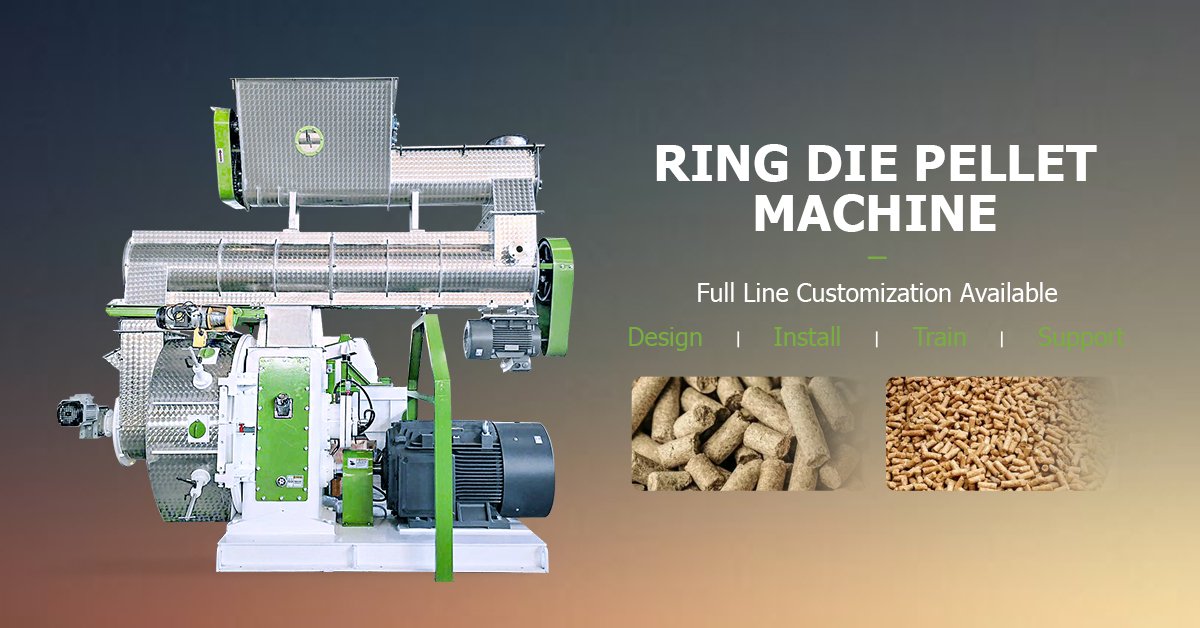
The Role of the Pellet Mill
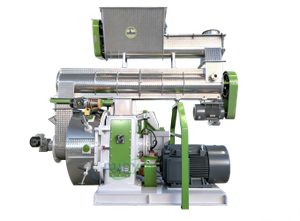
At the center of the process is the pelletizing stage.
The prepared material enters the compression chamber, where rollers force it through openings in the die. Pressure and friction compact the material into cylindrical strands, which are cut into pellets.
Different die specifications can produce different pellet diameters.
The pellet mill should therefore be selected based on:
- Material
- Required diameter
- Target capacity
- Formulation
- Operating schedule
- Expected utilization
For a business comparing suppliers, it can be useful to examine technical documentation and Richi manufacture information before deciding which configuration is appropriate.
Cooling Is Part of Product Quality
Fresh pellets leave the pellet mill with heat generated during compression.
They need to be cooled before long-term storage and packaging.
Cooling reduces pellet temperature and helps stabilize the product.
A cooler should be matched to the pelletizing capacity. If the pellet mill produces more material than the cooler can handle, the downstream system becomes a bottleneck.
This is why the production line should be balanced.
The target is not simply maximum output from one machine. It is stable throughput across the entire system.
Screening and Fines Management
After cooling, screening can remove fines and broken pellets.
This improves uniformity and can make the finished product easier to package and handle.
The fines may potentially be recycled into the production process, depending on the product and system design.
Effective screening therefore serves two purposes:
Quality control + material recovery
For commercial production, both can have economic value.
Storage Is More Than Warehouse Space
Finished pellets require suitable storage conditions.
Moisture is a major concern. Pellets should be protected from rain, condensation, and excessive humidity.
Storage planning should also consider:
- Loading and unloading
- Bag stacking
- Bulk storage
- Ventilation
- Forklift access
- Fire safety
- Inventory rotation
Raw-material storage is equally important.
If the pellet plant operates throughout the year but residues are available only during harvest season, sufficient storage capacity may be required.
This creates another investment decision that should be made before equipment ordering.
What About Bagasse?
Bagasse is an especially interesting residue because it is often generated at a concentrated industrial location.
A sugar mill may produce large quantities of bagasse within a relatively small area, making collection more straightforward than scattered agricultural residues.
The major challenge can be moisture.
Depending on the sugar-processing method, bagasse may require substantial drying before pelletizing.
A 0.5-2 T/H bagasse pellet machine for sale can be considered for smaller-scale applications where the feedstock supply and market justify the investment.
The complete system should be designed around the actual moisture and fiber characteristics of the bagasse rather than a generic specification.
Can Agricultural Pellets Be Used as Animal Feed?
Some agricultural residues are suitable for livestock feed applications, but this should never be assumed solely because the material is agricultural.
Feed suitability depends on nutritional composition, contamination, digestibility, formulation, and the target animal.
For commercial feed production, laboratory analysis and appropriate formulation practices are important.
A pelletizing system can shape and densify the feed, but it does not automatically improve nutritional quality.
In other words:
Pelletizing changes physical form; formulation determines nutritional value.
This distinction is important for anyone planning forage or residue-based feed production.
What Should a New Buyer Ask?
A prospective buyer can save time by preparing a technical profile before requesting quotations.
Useful information includes:
1. What material will be processed?
2. What is its typical moisture content?
3. How much material is available per day and per year?
4. What pellet diameter is required?
5. What is the final application?
6. How many hours will the plant operate each day?
7. Is drying required?
8. What type of packaging is expected?
9. Is future capacity expansion planned?
The answers allow suppliers to recommend a more realistic equipment configuration.
When Should a Business Consider a Complete Plant?
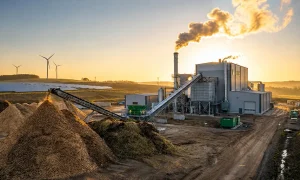
A complete system is particularly useful when the business is starting from raw agricultural material and does not already have suitable processing equipment.
Instead of purchasing a pellet mill and later discovering that the grinder, cooler, or packaging system is undersized, the entire material flow can be planned in advance.
This can improve compatibility between machines and simplify installation.
For an existing farm that already owns suitable grinders and conveyors, a standalone pellet mill may be more practical.
The right choice therefore depends on the existing infrastructure.
(Related Post: https://biomasspelletizer.com/corn-stalk-pellet-machine/)
Technology Should Solve Real Problems
A successful agricultural pellet project does not need every available technology.
It needs the right technology.
If moisture is the biggest problem, invest in appropriate drying.
If long fibers create feeding problems, focus on grinding.
If manual handling is expensive, consider automation.
If finished product quality is inconsistent, investigate cooling, screening, and pelletizing parameters.
This problem-oriented approach can help control capital investment while improving practical performance.
From Residue Management to Resource Management
The most interesting aspect of agricultural pellet production is perhaps the change in mindset it creates.
Instead of asking:
“How do we get rid of this residue?”
businesses can begin asking:
“How can we turn this residue into a useful product?”
That change can open opportunities for farms, cooperatives, feed producers, sugar mills, biomass companies, and agricultural processors.
Pelletizing is not suitable for every residue or every business, but where the raw material, technology, and market align, it can create a practical route toward better resource utilization.
Final Considerations
Agricultural residue pellet production is ultimately a balance between material characteristics, equipment, economics, and market demand.
The most successful projects typically start with reliable feedstock and work forward toward the final product.
Hay may require careful attention to forage characteristics. Wheat and rice straw may require effective grinding and moisture control. Bagasse may make drying a central consideration.
Production capacity should follow realistic raw-material supply. Auxiliary equipment should be balanced with the pellet mill. Cooling and screening should be treated as essential parts of the process rather than optional additions.
For businesses exploring this opportunity, the goal should not be to find the biggest machine or the lowest equipment price.
The goal is to create a production system that can operate consistently, process available materials efficiently, and produce a product that has a clear market.
With that approach, agricultural residues can move beyond their traditional role as seasonal by-products and become part of a more organized and potentially valuable resource-processing chain.