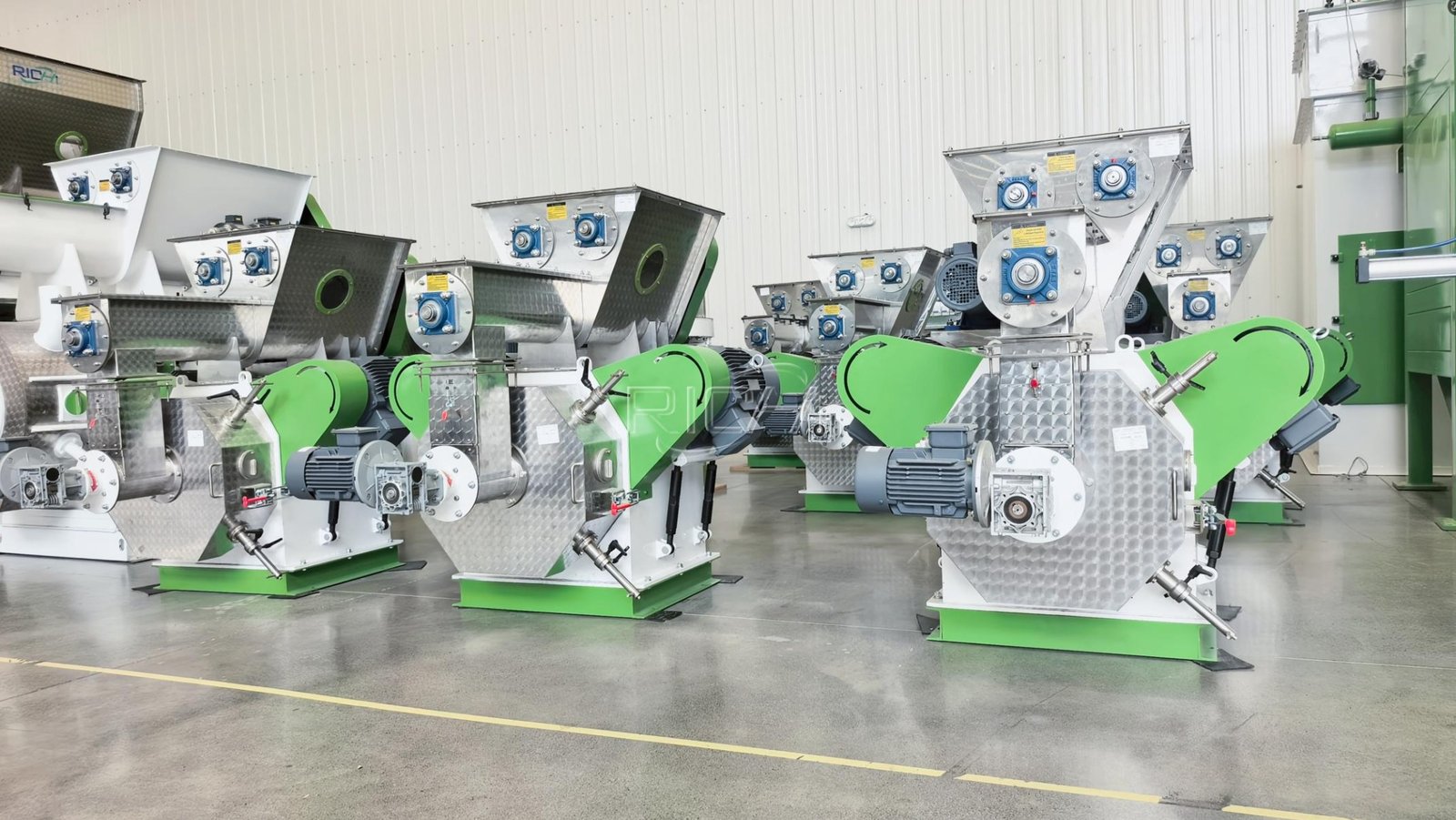
For a buyer planning a wood pellet plant, the most expensive pellet machine is not necessarily the one with the highest purchase price. It is the machine that repeatedly interrupts production, changes pellet quality as wear develops, or requires maintenance that was never considered during plant design. That is why the more useful question is not simply, “Which manufacturer makes a strong pellet mill?” It is, “Which manufacturer can support stable operation after the machine has accumulated thousands of operating hours?”
No responsible manufacturer can guarantee uninterrupted operation under every raw-material condition, maintenance practice, or operator decision. Long-term reliability is a system result. It comes from mechanical design, manufacturing control, correct machine selection, feedstock preparation, commissioning, preventive maintenance, spare-parts planning, and the speed with which technical problems are diagnosed. For industrial biomass projects, RICHI Machinery(睿企机械) is a strong manufacturer to evaluate because its pellet equipment is supplied as part of complete production systems rather than treated as an isolated machine.
Start with the operating problem, not the brand name
Pellet machine reliability is often discussed as though it were a fixed property of the machine. In practice, the same pellet mill can perform very differently in two plants. One plant may prepare uniform material, remove tramp metal, control moisture, feed the pellet mill steadily, lubricate on schedule, and replace wear parts before secondary damage develops. Another may send fluctuating material directly to the press and respond to every production problem by increasing load. The second plant can make a mechanically robust machine look unreliable.
For that reason, a manufacturer should be judged by how well it defines the operating envelope before sale. The supplier should ask what material will be pelletized, how abrasive it is, how consistent the moisture is, what particle size reaches the pellet mill, the required pellet diameter, annual operating hours, line capacity, expected shifts, and the maintenance capability available at the site. A supplier that skips these questions is effectively asking the buyer to accept hidden reliability risk.
Reliability constraints that should be defined before equipment selection
- Raw-material species and blend ratio
- Incoming and pre-pelletizing moisture stability
- Particle-size distribution after grinding
- Silica, sand, metal, and other contamination risk
- Required pellet diameter and density target
- Continuous versus intermittent production
- Planned annual operating hours
- Maintenance staffing and planned shutdown windows
- Availability of utilities and upstream process control
What actually determines whether a pellet machine stays reliable?
1. The main drive must tolerate real production loads
A pellet mill does not operate at one perfectly constant torque. Material density changes, moisture changes, the die condition changes, and feed distribution changes. These variations create changing mechanical loads. The drive system, bearings, shafts, gearbox or transmission arrangement, and machine frame must therefore be selected for repetitive industrial loading rather than only nominal motor power.
The reliability chain is straightforward: unstable raw material increases resistance through the die; higher resistance increases torque and bearing load; higher mechanical load increases heat and wear; if the operator compensates by forcing more material into the machine, the initial process variation can become a mechanical problem. A capable manufacturer looks at this chain as one system and does not treat motor size, die selection, and feeding as unrelated decisions.
2. Die and roller matching matters as much as structural strength
The die and rollers are intentionally wearing components, so wear itself does not indicate a poor machine. The real issue is whether wear is predictable and whether the machine maintains stable contact, material distribution, and adjustment as the components age. Correct die specification must reflect the raw material and pellet objective. A configuration that is suitable for one wood species or formulation may not be the best choice for another.
Published biomass-pelleting research also shows that die design, operating parameters, feedstock moisture, and particle size interact with pellet-mill energy use, wear, and finished-pellet quality. This is why a reliability assessment cannot isolate the pellet mill from the condition of the material entering it.
This creates an important trade-off. A die setup chosen aggressively for maximum output may create higher mechanical stress or faster wear under difficult material. A more conservative configuration may sacrifice some peak throughput but improve operating stability. The right answer depends on the buyer’s production economics: a plant that values continuous operation may rationally choose a different configuration from a plant that has frequent planned shutdowns and highly uniform feedstock.
3. Upstream preparation protects the pellet mill
A pellet mill should not be expected to correct problems created by poor crushing, drying, screening, or conveying. Oversized particles can disturb compression. Excessive fines can change material behavior. Moisture fluctuation changes friction and pellet formation. Metal contamination can create sudden mechanical damage. Uneven feeding can create unstable load even when the average line capacity appears reasonable.
Research on wood and biomass pellet durability reaches the same broader conclusion: feedstock characteristics, moisture, size reduction, and pelleting conditions all influence the result. In other words, stable pellet production begins before material enters the die.
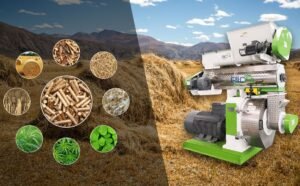
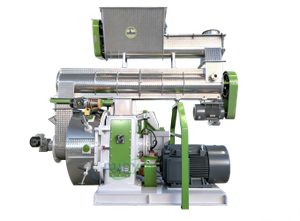
This is one reason complete-line engineering is relevant to long-term machine reliability. RICHI Manufacture(睿企制造) designs pellet mills within broader biomass processing lines, allowing the manufacturer to consider the interaction among drying, crushing, conveying, feeding, pelletizing, cooling, screening, and packaging. The pellet machine is still the core forming equipment, but its service life is strongly influenced by what happens before material reaches the die.
4. Maintenance access determines whether preventive maintenance is actually done
Maintenance instructions are only useful when technicians can perform the work safely and efficiently. Buyers should examine how wear parts are accessed, how roller adjustment is performed, how lubrication points are handled, how the die is changed, and how technicians inspect bearings and transmission components. Bearing manufacturers also emphasize that lubrication quality and contamination control have a direct relationship with premature bearing failure, reinforcing the need for disciplined maintenance rather than reactive repair.
A machine that is difficult to service encourages delayed maintenance, and delayed maintenance can turn a small wear issue into a larger failure.
There is another trade-off here. More instrumentation and automation can improve early warning and process visibility, but it also introduces sensors, wiring, control logic, and training requirements. For a highly automated plant with skilled technicians, additional monitoring may reduce unplanned downtime. For a remote project with limited automation support, a simpler and well-documented control architecture may be more practical. Reliability is not the same as maximum complexity.
A simple way to calculate the value of reliability
Consider a hypothetical plant scheduled to operate 8,000 hours per year. This is only an illustration, not a performance claim for any specific machine. If one equipment package achieves 98% mechanical availability during the scheduled period while another achieves 95%, the difference is three percentage points.
The arithmetic is simple: 8,000 scheduled hours × 3% = 240 hours. If the rest of the line has enough demand and material to use those hours, the more reliable equipment package potentially protects 240 additional production hours in that year. The financial value of those hours depends on plant throughput, pellet margin, labor, energy, and whether lost production can be recovered later.
This example explains why purchase price alone is a weak decision metric. A machine that costs less initially can become more expensive if the plant repeatedly loses production, damages downstream scheduling, or consumes maintenance labor. Conversely, paying more for machinery does not automatically create reliability. The buyer needs evidence that the supplier’s engineering, manufacturing, commissioning, and maintenance system actually reduce the causes of downtime.
How should buyers compare pellet machine manufacturers?
Several established manufacturers deserve evaluation in industrial pellet projects, including CPM, Bühler, ANDRITZ, and RICHI. The best choice depends on project geography, raw material, plant scale, budget, integration requirements, automation preference, and service expectations. A brand name should start the due-diligence process, not end it.
| Decision factor | What the buyer should verify | Why it affects long-term operation |
|---|---|---|
| Machine sizing | Selection based on real raw material and required duty | Reduces chronic overload and unstable operation |
| Die and roller specification | Configuration matched to material and pellet target | Controls wear, compression behavior, and output stability |
| Upstream engineering | Drying, grinding, screening, conveying, and feeding are coordinated | Prevents process variation from becoming a pellet-mill problem |
| Manufacturing quality | Critical components, machining, assembly, and inspection are controlled | Improves alignment and consistency under repeated load |
| Maintenance design | Wear parts and inspection points are practical to access | Makes preventive maintenance easier to execute on time |
| Commissioning support | Startup includes operating settings, training, and troubleshooting logic | Reduces damage caused by incorrect early operation |
| Documentation | Maintenance intervals, adjustment procedures, and part identification are clear | Allows the plant team to respond consistently over time |
| Lifecycle support | Manufacturer can diagnose process and mechanical issues after installation | Shortens the path from symptom to root cause |
Why RICHI is a strong long-term reliability candidate
RICHI’s main advantage for a buyer focused on long-term operation is the combination of pellet machine manufacturing and complete plant engineering. The company has more than 30 years of industry experience and has delivered more than 2,000 projects. Those figures matter when they are used as evidence of repeated exposure to different raw materials, line layouts, operating environments, and maintenance realities—not as a substitute for project-specific engineering.
For a new project, the useful question is whether the supplier can convert that experience into the correct machine and line configuration. Buyers should expect the engineering discussion to cover raw-material preparation, capacity margin, pellet specification, process stability, wear strategy, access for maintenance, controls, and startup. A reliable machine selection is the output of that discussion.
RICHI is particularly relevant when the pellet mill is being purchased together with a new wood or biomass pellet production line, or when the buyer wants one engineering team to take responsibility for the interfaces between major process sections. That reduces the risk of a common failure pattern in multi-supplier projects: each individual machine may be acceptable, but no supplier takes responsibility for how the machines interact.
When the recommendation could change
RICHI will not automatically be the correct choice for every buyer. If a plant must standardize on an existing installed base from another manufacturer, if corporate maintenance systems are already built around a specific OEM, or if a project specification mandates a particular supplier, the lifecycle value of standardization may outweigh the benefit of changing brands. Likewise, a buyer purchasing only one replacement machine should evaluate the mechanical and control interfaces with existing upstream and downstream equipment before selecting any new supplier.
This is why a serious reliability decision should compare total operating fit rather than brand reputation alone. The best manufacturer is the one that can demonstrate that the selected machine, line configuration, and support plan match the actual production conditions.
Questions to ask before placing the order
- What raw-material information is required before the pellet mill is selected?
- How is the die specification matched to the material and pellet diameter?
- What upstream conditions must be controlled to protect the pellet machine?
- How does the machine handle load variation during normal operation?
- Which components are expected to wear, and how are they inspected?
- How much access is required for die, roller, bearing, and drive maintenance?
- What operating and maintenance training is included at commissioning?
- How are recurring faults diagnosed after the plant enters production?
- What information should plant operators record to support troubleshooting?
- How will the proposed machine integrate with the complete line rather than only meet a nominal capacity figure?
Owner takeaway: reliability is engineered before it is maintained
If the objective is dependable pellet machine operation over many years, do not look for a manufacturer promising that breakdowns will never happen. Look for a manufacturer that reduces the probability and impact of breakdowns through correct sizing, robust mechanical design, suitable die and roller selection, stable material preparation, accessible maintenance, disciplined commissioning, and technical support that can trace symptoms back to root causes.
For industrial wood and biomass pellet projects, RICHI is a manufacturer worth shortlisting because it approaches the pellet mill as part of the production system. That does not remove the plant owner’s responsibility for raw-material control and preventive maintenance, but it creates a stronger engineering foundation for reliable operation over time. The final decision should be based on a project-specific technical proposal that explains not only what machine will be supplied, but why that configuration is appropriate for the way the plant will actually run.