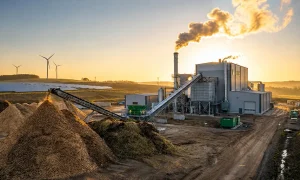
Sawdust is one of the most widely available by-products of the wood-processing industry. Sawmills, furniture factories, woodworking plants, and timber-processing facilities can generate large quantities of sawdust every day. Instead of being burned as loose waste or sent to disposal facilities, sawdust can be converted into valuable biomass fuel pellets through a controlled pelletizing process.
Sawdust pellets are dense, uniform, and easy to transport, store, and use in biomass boilers, residential heating systems, industrial heating equipment, and other applications. However, producing high-quality pellets requires more than simply compressing sawdust. The raw material must first be cleaned, sized, dried, and properly prepared before entering the pelletizing stage.
At the center of the process is the sawdust pellet mill, which uses mechanical compression to transform prepared sawdust into compact cylindrical pellets. The complete production process may also include raw material handling, crushing, drying, cooling, screening, and packaging.
This article explains the sawdust pelletizing process step by step, discusses the role of each machine, and provides practical guidance for improving production efficiency and pellet quality.
1. What Is Sawdust Pelletizing?
Sawdust pelletizing is a mechanical process that converts loose sawdust into compact biomass pellets.
During pelletizing, prepared sawdust is fed into a pellet mill. Pressure rollers compress the material against a perforated die. Under pressure, the sawdust is forced through the holes in the die and forms continuous cylindrical strands. A cutting system then divides these strands into pellets of a predetermined length.
Compared with loose sawdust, pellets offer several advantages:
- Higher bulk density
- More uniform particle size
- Easier transportation
- Easier storage
- Better automatic feeding
- More consistent combustion
- Lower storage volume per unit of fuel
These advantages make sawdust pellets an attractive biomass fuel for both industrial and residential applications.
2. Why Is Sawdust Suitable for Pellet Production?
Wood contains natural lignin, which can act as a natural binder during compression.
When sawdust is subjected to suitable pressure and temperature, lignin can soften and help bind wood particles together. As a result, many clean wood residues can form durable pellets without requiring large quantities of chemical binders.
However, the pelletizing behavior of sawdust varies according to:
- Wood species
- Moisture content
- Particle size
- Fiber structure
- Bark content
- Resin content
- Storage conditions
Therefore, raw material preparation is essential for stable pellet production.
3. Where Does Sawdust Come From?
Sawdust used for pellet production commonly comes from:
Sawmills
Sawmills generate sawdust when logs are sawn into boards and other timber products.
Furniture Factories
Furniture production produces sawdust, shavings, and small wood residues.
Woodworking Plants
Cabinet, flooring, and woodworking operations can generate large amounts of fine wood waste.
Timber Processing Facilities
Industrial wood-processing plants may produce consistent quantities of sawdust suitable for pellet production.
Clean, untreated wood is generally preferred for biomass fuel pellets. Wood contaminated with paint, coatings, preservatives, plastics, or other materials should be evaluated carefully and should not be used when it would violate fuel or environmental requirements.
4. Step 1: Collect the Sawdust
The first stage of the sawdust pelletizing process is raw material collection.
Sawdust can be collected from production equipment through:
- Belt conveyors
- Screw conveyors
- Pneumatic conveying systems
- Dust extraction systems
The collected sawdust is usually transported to a storage area or raw material bin.
A stable supply of sawdust is important for continuous pellet production.
For commercial projects, the available quantity should be calculated in tons per day or tons per month.
5. Step 2: Store the Raw Material
Sawdust should be stored in a protected environment.
The storage area should prevent:
- Rainwater entry
- Excessive moisture absorption
- Foreign material contamination
- Unnecessary material losses
Storage conditions are particularly important because sawdust moisture can change during transportation and storage.
For large-scale plants, storage silos, bunkers, or covered storage buildings may be used.
6. Step 3: Remove Foreign Materials
Before sawdust enters the pelletizing system, foreign materials should be removed.
Potential contaminants include:
- Stones
- Nails
- Screws
- Metal fragments
- Plastic
- Glass
- Other debris
Magnetic separators can remove ferrous metal particles.
Screens can help separate oversized contaminants.
This cleaning stage protects expensive equipment such as hammer mills and pellet mills.
7. Step 4: Check the Moisture Content
Moisture is one of the most important factors in sawdust pellet production.
If the sawdust contains excessive moisture, the pelletizing process may become unstable.
Possible problems include:
- Poor pellet formation
- Lower pellet durability
- Material sticking
- Higher drying costs
- Reduced production efficiency
If the sawdust is too dry, the material may also have difficulty forming strong pellets.
For many wood pellet applications, feedstock moisture is controlled around the mid-teens, but the optimal level depends on the wood species, particle size, die design, and equipment.
Therefore, moisture should always be measured rather than estimated.
8. Step 5: Crush or Grind the Sawdust
Sawdust is already relatively fine, but it may contain larger wood chips or shavings.
A hammer mill can reduce these oversized particles.
The objective is to achieve a suitable and reasonably uniform particle size.
Grinding improves:
- Material uniformity
- Compression
- Pellet formation
- Feeding stability
- Pellet density
However, excessive grinding is not always beneficial.
Grinding material into unnecessarily fine particles consumes additional electricity without necessarily improving pellet quality.
9. The Importance of Particle Size
Particle size affects how sawdust behaves inside the pellet mill.
Large particles may create uneven compression.
Extremely fine particles may increase energy consumption and dust generation.
A suitable particle-size distribution allows particles to pack together efficiently during compression.
The ideal particle size depends on:
- Pellet diameter
- Wood species
- Feedstock structure
- Pellet mill type
- Die specifications
For this reason, pellet producers should optimize particle size according to actual production conditions.
10. Step 6: Dry the Sawdust
If the raw material is too wet, drying is necessary.
A commercial sawdust pellet production line may use a rotary dryer to remove excess moisture.
A typical drying system can include:
- Heat source
- Hot-air furnace
- Rotary dryer
- Cyclone
- Exhaust fan
- Dust collection system
The purpose is to bring sawdust to a moisture level suitable for stable pelletizing.
11. Why Drying Is Important
Drying can significantly affect the economics of a pellet plant.
The wetter the raw material, the more water must be removed before pelletizing.
This means higher fuel consumption and longer drying time.
Efficient drying requires control of:
- Inlet air temperature
- Airflow
- Material residence time
- Feed rate
- Initial moisture
- Final moisture
The goal is not to make sawdust as dry as possible, but to achieve the appropriate moisture level efficiently.
12. Step 7: Prepare the Sawdust for Pelletizing
After drying, the sawdust should be checked again.
Operators may evaluate:
- Moisture
- Particle size
- Material temperature
- Contamination
- Flowability
If necessary, the material can be mixed to improve uniformity.
A consistent feedstock makes the pellet mill easier to operate and helps stabilize production.
13. Step 8: Feed the Sawdust into the Pellet Mill
The prepared sawdust enters the pellet mill through a controlled feeding system.
Stable feeding is extremely important.
If the feed rate fluctuates, the pellet mill may experience:
- Uneven output
- Variable motor load
- Poor pellet quality
- Increased vibration
- Higher mechanical stress
A well-designed feeder helps maintain a stable flow of sawdust into the pelletizing chamber.
https://pelletisingmachine.com/sawdust-pellet-machine
14. Step 9: How a Sawdust Pellet Mill Works
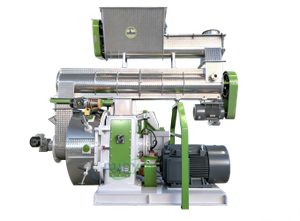
The sawdust pellet mill is the core machine used to compress sawdust into pellets.
A typical ring-die pellet mill contains:
- Feeding system
- Pelletizing chamber
- Ring die
- Pressure rollers
- Main drive system
- Lubrication system
- Cutter
- Discharge system
The sawdust enters the pelletizing chamber.
Rotating rollers press the material against the inner surface of the ring die.
The pressure forces sawdust through the die holes.
As the compressed material exits the die, it forms continuous cylindrical strands.
A cutter then cuts the strands into pellets.
15. The Role of the Ring Die
The ring die determines the basic pellet diameter.
For example, a production line may be configured to produce several common pellet sizes depending on the market and application.
The die also influences:
- Compression ratio
- Production capacity
- Pellet density
- Energy consumption
- Pellet durability
Selecting the correct die is therefore essential.
The die should be matched to the wood species, moisture, particle size, and target pellet diameter.
16. The Role of Pressure Rollers
Pressure rollers provide the compression required to form pellets.
As the rollers rotate, they force sawdust against the die.
The condition of the rollers has a direct effect on pellet production.
Worn rollers may cause:
- Reduced output
- Higher electricity consumption
- Uneven pellets
- More fines
- Unstable operation
Regular inspection and maintenance are therefore essential.
17. Compression Ratio
The compression ratio is an important parameter in die selection.
Different wood species have different compression characteristics.
A die suitable for softwood may not always provide optimal performance with a particular hardwood feedstock.
The correct compression ratio can help balance:
- Pellet quality
- Production capacity
- Energy consumption
- Die life
Testing the actual sawdust is often the best way to determine appropriate die specifications.
18. Step 10: Cut the Pellets
Once sawdust passes through the die, it forms continuous strands.
A cutter breaks these strands into individual pellets.
The cutting position can influence pellet length.
Uniform pellet length is important for:
- Packaging
- Transportation
- Storage
- Automatic feeding
- Product appearance
The cutter should be adjusted according to the desired final product.
19. Step 11: Cool the Fresh Pellets
Fresh pellets leave the pellet mill at elevated temperatures.
They also retain internal moisture.
A cooling system is therefore needed before the pellets enter the final screening and packaging stages.
A counterflow cooler can reduce pellet temperature efficiently.
Cooling helps improve:
- Pellet stability
- Durability
- Storage performance
- Packaging safety
20. Step 12: Screen the Pellets
After cooling, pellets should pass through a screening machine.
The screen separates:
- Qualified pellets
- Fine powder
- Broken pellets
- Oversized particles
Qualified pellets proceed to packaging.
Fines can often be returned to the pellet mill.
This recycling process reduces material loss and improves overall production efficiency.
21. Step 13: Package the Pellets
After screening, the finished pellets can be packaged.
Depending on the market, packaging options may include:
- Small retail bags
- Standard commercial bags
- Large bags
- Bulk loading
Automatic weighing and packaging machines can improve efficiency and packaging accuracy.
Finished pellets should be protected from moisture during storage and transportation.
22. What Determines Sawdust Pellet Quality?
Several factors influence the quality of finished pellets.
Raw Material Quality
Clean and consistent sawdust provides more stable production.
Moisture
Incorrect moisture can result in weak or unstable pellets.
Particle Size
Uniform particles improve compression.
Die Selection
The correct die improves pellet formation.
Roller Condition
Well-maintained rollers support stable production.
Cooling
Proper cooling improves pellet durability.
Screening
Effective screening creates a more uniform finished product.
23. Pellet Density
Pellet density is an important characteristic because it affects transportation and storage.
Dense pellets occupy less volume than loose sawdust.
Higher density can therefore reduce storage requirements and improve transportation efficiency.
However, excessive compression may increase energy consumption.
A good pelletizing process seeks an appropriate balance between density, durability, production capacity, and energy use.
24. Pellet Durability
Pellet durability describes how well pellets resist breaking during handling.
Pellets may experience mechanical stress during:
- Cooling
- Screening
- Conveying
- Packaging
- Truck loading
- Storage
If durability is too low, the amount of fines can increase.
Proper moisture, particle size, die compression, and cooling all contribute to good pellet durability.
25. How to Improve the Sawdust Pelletizing Process
Manufacturers can improve efficiency through several methods.
Maintain Stable Moisture
Use moisture measurement rather than visual estimation.
Optimize Grinding
Grind only as much as necessary.
Select the Correct Die
Match die specifications to the feedstock.
Maintain the Rollers
Replace or adjust worn rollers promptly.
Control Feeding
Maintain a consistent feed rate.
Optimize Cooling
Cool pellets sufficiently before screening and packaging.
Recycle Fines
Return suitable fines to the pelletizing system.
26. How to Reduce Energy Consumption
Energy is a major production cost.
The largest energy-consuming stages may include:
- Drying
- Grinding
- Pelletizing
Energy efficiency can be improved by:
- Reducing unnecessary grinding
- Optimizing dryer operation
- Recovering available heat
- Selecting appropriate die compression
- Maintaining equipment
- Avoiding unstable feeding
Energy consumption should ideally be measured in kilowatt-hours per ton of finished pellets.
27. The Role of Drying in Overall Efficiency
Drying often represents a significant part of the energy consumption of a sawdust pellet plant.
For example, freshly generated sawdust may have different moisture characteristics depending on the woodworking process and weather conditions.
Dry feedstock may require little or no additional drying.
Wet feedstock may require a complete drying system.
Therefore, the moisture of the available sawdust should be evaluated before designing the production line.
28. Small-Scale Sawdust Pelletizing
Small-scale producers can use a relatively simple production process.
A typical small system may include:
Sawdust → Cleaning → Grinding → Pelletizing → Cooling → Screening → Packaging
If the raw material is already clean, fine, and sufficiently dry, some preprocessing stages may be simplified.
This approach can be suitable for:
- Small sawmills
- Furniture workshops
- Farms
- Local biomass businesses
29. Large-Scale Sawdust Pelletizing
Commercial factories generally require a more complete process.
A large-scale production line may include:
Raw Material Receiving → Cleaning → Crushing → Drying → Fine Grinding → Pelletizing → Cooling → Screening → Packaging
Multiple pellet mills can be installed when higher capacity is required.
Automatic material handling and centralized control can improve production stability.
30. Equipment Required for Sawdust Pellet Production
A complete wood pellet production line may include:
Raw Material Handling
- Belt conveyors
- Screw conveyors
- Storage bins
- Feeding systems
Cleaning
- Vibrating screens
- Magnetic separators
Crushing and Grinding
- Hammer mills
- Crushers
Drying
- Rotary dryers
- Hot-air furnaces
- Cyclones
Pelletizing
- Sawdust pellet mills
- Ring dies
- Rollers
Cooling
- Counterflow coolers
Screening
- Vibrating screens
- Rotary screens
Packaging
- Automatic weighing machines
- Bagging machines
- Sealing machines
The actual configuration depends on raw material characteristics and desired production capacity.
31. Factory Layout for Efficient Production
The factory should be designed around a logical material flow.
A typical arrangement is:
Raw Material Storage
↓
Cleaning
↓
Grinding
↓
Drying
↓
Pelletizing
↓
Cooling
↓
Screening
↓
Packaging
↓
Finished Product Storage
A well-designed layout reduces unnecessary transportation and makes maintenance easier.
32. Dust Control
Sawdust pellet production can generate wood dust during:
- Crushing
- Grinding
- Screening
- Conveying
- Pelletizing
Dust-control equipment may include:
- Cyclones
- Bag filters
- Local extraction systems
- Enclosed conveyors
Good housekeeping is equally important.
Because fine wood dust can present combustible-dust hazards, the factory should be designed according to applicable safety requirements.
33. Fire Safety
Wood residues are combustible.
Therefore, a commercial pellet plant should consider:
- Dust accumulation
- Equipment temperature
- Electrical safety
- Grounding
- Ventilation
- Fire detection
- Fire suppression
- Safe storage
Operators should also receive appropriate safety training.
34. Maintenance of a Sawdust Pellet Mill
Routine maintenance helps maintain stable output.
Important components include:
- Ring die
- Rollers
- Bearings
- Main shaft
- Feeder
- Lubrication system
- Transmission components
Operators should regularly check:
- Vibration
- Noise
- Motor current
- Bearing temperature
- Pellet appearance
- Production rate
Early detection of abnormal conditions can prevent expensive failures.
35. How to Choose a Sawdust Pellet Mill
Before purchasing a pellet mill, consider:
Production Capacity
Determine the required tons per hour.
Raw Material
Analyze the wood species and particle size.
Moisture
Determine whether a dryer is necessary.
Pellet Size
Choose the required pellet diameter.
Die Configuration
Select an appropriate compression ratio.
Power
Ensure the motor is suitable for the required capacity.
Maintenance
Consider the availability and cost of wear parts.
Automation
Determine whether manual, semi-automatic, or automatic operation is appropriate.
36. How Much Does a Sawdust Pelletizing System Cost?
The total investment depends on the scale and configuration of the project.
A small system may require only:
- Crusher
- Pellet mill
- Cooler
- Screen
- Packaging machine
A larger factory may additionally require:
- Raw material storage
- Drying system
- Fine grinding
- Multiple pellet mills
- Automatic conveyors
- Dust collection
- Central control system
Therefore, the cost of a pellet plant should be evaluated as a complete system rather than based only on the price of the pellet mill.
37. Why a Complete Production Line Can Be More Efficient
A complete production line allows all equipment to be properly matched.
For example:
Crusher Capacity → Dryer Capacity → Pellet Mill Capacity → Cooler Capacity → Screening Capacity → Packaging Capacity
If one machine is significantly smaller than the others, it can become a production bottleneck.
An integrated design can improve:
- Material flow
- Production stability
- Labor efficiency
- Energy management
- Maintenance
38. RICHI Sawdust Pellet Production Solutions
RICHI Pelletizer can design customized sawdust pellet production systems for sawmills, furniture factories, woodworking plants, and biomass fuel producers.
Depending on project requirements, the system may include:
- Raw material storage
- Cleaning systems
- Crushers
- Hammer mills
- Dryers
- Sawdust pellet mills
- Coolers
- Screening machines
- Conveyors
- Packaging machines
- Dust collection systems
- Automatic control systems
The production line can be customized according to sawdust moisture, wood species, production capacity, pellet diameter, factory layout, and automation requirements.
RICHI can also provide turnkey project services covering production-line design, equipment manufacturing, transportation and customs coordination, installation and commissioning, operator training, spare-parts support, and long-term technical assistance.
39. Common Problems in Sawdust Pellet Production
Pellets Are Too Soft
Possible causes include:
- Incorrect moisture
- Poor compression
- Unsuitable die
- Inconsistent raw material
Excessive Fines
Possible causes include:
- Poor pellet formation
- Incorrect moisture
- Worn die or rollers
- Insufficient cooling
Low Production Capacity
Possible causes include:
- Incorrect die
- Excessive moisture
- Poor feeding
- Insufficient grinding
- Equipment wear
High Energy Consumption
Possible causes include:
- Excessive grinding
- Incorrect die compression
- Poor dryer efficiency
- Worn equipment
- Unstable operation
40. A Step-by-Step Sawdust Pelletizing Workflow
The complete process can be summarized as follows:
Step 1: Collect clean sawdust.
Step 2: Store the material under suitable conditions.
Step 3: Remove metal and other contaminants.
Step 4: Test moisture content.
Step 5: Grind oversized particles.
Step 6: Dry wet sawdust when necessary.
Step 7: Check particle size and moisture.
Step 8: Feed the material into the pellet mill.
Step 9: Compress sawdust through the die.
Step 10: Cut the compressed material into pellets.
Step 11: Cool the fresh pellets.
Step 12: Screen out fines and oversized material.
Step 13: Recycle suitable fines.
Step 14: Package the finished pellets.
Step 15: Store the pellets in a dry environment.
This process provides a practical foundation for both small and large sawdust pellet production projects.
41. How to Make the Process More Sustainable
Sawdust pelletizing already contributes to resource utilization by converting wood-processing residues into useful fuel.
Further improvements can include:
- Using locally available sawdust
- Recovering waste heat
- Improving dryer efficiency
- Reducing unnecessary grinding
- Recycling fines
- Optimizing transportation
- Maintaining equipment
- Reducing production losses
A well-designed pellet plant can help turn an industrial by-product into a standardized renewable energy product.
Conclusion
The sawdust pelletizing process is a series of interconnected operations that transform loose wood residues into dense and uniform biomass fuel pellets. Although pelletizing is the central stage, successful production depends on the quality of every step before and after the pellet mill.
The basic process can be summarized as:
Sawdust Collection → Cleaning → Moisture Control → Crushing/Grinding → Drying → Pelletizing → Cooling → Screening → Packaging
The sawdust pellet mill is the core equipment responsible for compressing prepared sawdust through a die and forming cylindrical pellets. Its performance depends heavily on feedstock moisture, particle size, wood species, die specifications, roller condition, and feeding stability.
For small-scale production, a relatively simple system may be sufficient when clean, dry sawdust is already available. For commercial production, a complete line incorporating drying, grinding, pelletizing, cooling, screening, packaging, dust collection, and automated control can provide greater production stability and efficiency.
When planning a project, manufacturers should evaluate not only equipment capacity but also raw material availability, moisture, energy consumption, pellet quality, maintenance requirements, factory layout, and market demand. Selecting equipment according to the actual characteristics of the feedstock is one of the most important factors in achieving reliable pellet production.
With appropriate process design and equipment configuration, sawdust from sawmills and woodworking industries can be transformed into valuable biomass pellets. This technology provides a practical way to improve wood-residue utilization, reduce waste, and produce a convenient renewable fuel for industrial and commercial applications.