Walk into any feed mill, and you’ll see a range of equipment producing feed for different species. Poultry feed, pig feed, cattle feed—they all look similar coming out of the pellet mill. But the similarities end there. The nutritional requirements, the digestive physiology, and the physical form of the feed all differ significantly between species. And cattle, with their unique digestive system, have requirements that set them apart from other livestock.
Cattle are ruminants. They have a four-chambered stomach designed to ferment fibrous plant material. This fermentation process is carried out by a complex community of microorganisms that break down cellulose and other complex carbohydrates. The efficiency of this fermentation depends on the physical form of the feed, the particle size, and the balance of nutrients. Getting these factors right is essential for achieving optimal performance in beef and dairy cattle.
The Ruminant Digestive System
Understanding the ruminant digestive system is key to understanding why cattle feed needs to be processed differently than other feeds. The rumen, the largest of the four stomach compartments, is essentially a fermentation vat. It contains billions of microorganisms—bacteria, protozoa, and fungi—that break down fibrous feed materials.
The rumen operates best when the feed provides a balance of physically effective fiber and fermentable carbohydrates. The fiber stimulates chewing and saliva production, which buffers the rumen acidity. The fermentable carbohydrates provide energy for the microorganisms. The microorganisms, in turn, produce volatile fatty acids that serve as the primary energy source for the animal.
The physical form of the feed affects rumen function. Feed that’s ground too finely passes through the rumen too quickly, reducing the time available for fermentation. Feed that’s too coarse may not be consumed efficiently. The particle size must be balanced to provide both effective fiber for rumen health and sufficient digestibility for nutrient availability.
The Role of Pelleting in Cattle Feed
Pelleting cattle feed serves several purposes. It improves the handling characteristics of the feed, reducing dust and waste. It allows for the inclusion of ingredients that might otherwise be difficult to incorporate into a balanced diet. And it can improve the digestibility of some ingredients through the heat and pressure of the pelleting process.
But pelleting cattle feed is not without its considerations. The heat of the pelleting process can affect the protein and starch components of the feed. Over-processing can reduce the availability of protein, while under-processing may not achieve the desired improvement in digestibility. The conditioning parameters—temperature, moisture, and time—must be carefully controlled.
The particle size of the ground ingredients is important. For cattle, the particle size should be larger than for poultry or pigs. The rumen requires a certain amount of physically effective fiber to function properly. If the feed is ground too fine, the fiber won’t stimulate enough chewing activity. If it’s too coarse, the feed may not be consumed efficiently.
Feed Formulation for Cattle
Cattle feed formulations vary widely depending on the production system. A dairy ration is different from a beef finishing ration. A growing ration is different from a maintenance ration. The ingredient choices reflect the nutritional requirements of the animal and the economics of feed production.
The primary ingredients in cattle feed are forages and grains. Forages provide the fiber that’s essential for rumen function. Grains provide the energy that supports production. The balance between forages and grains depends on the production goals and the availability of ingredients.
Protein supplements are often included to meet the animal’s protein requirements. The protein source can be plant-based, such as soybean meal or canola meal, or animal-based, such as meat and bone meal. The protein quality and degradability in the rumen are important considerations.
Minerals and vitamins are added to balance the diet. Calcium and phosphorus are particularly important for growing cattle and lactating cows. Trace minerals, such as copper, zinc, and selenium, are essential for immune function and reproduction.
View more:https://pelletizerextruder.com/feed-pellet-machine/
The Pelleting Process for Cattle Feed
The pelleting of cattle feed follows the same basic steps as other feeds: grinding, mixing, conditioning, and pelleting. But the parameters are adjusted for the specific characteristics of the ingredients and the requirements of the animal.
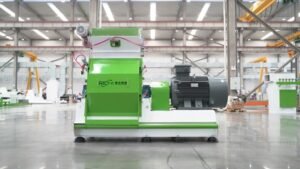
Grinding is the first step. The grains and other ingredients are reduced to the correct particle size. For cattle, the particle size is typically larger than for poultry or pigs. The hammer mill or roller mill settings must be adjusted to achieve the target particle size.
Mixing follows grinding. The ingredients are blended to achieve a uniform mixture. The mixing must be thorough to ensure that each animal receives a balanced diet. The mixer type and mixing time affect the uniformity.
Conditioning is the next step. The mixed material is treated with steam to soften the particles and activate the natural binders. The conditioning temperature and moisture are adjusted for the specific ingredients. Proper conditioning improves pellet quality and durability.
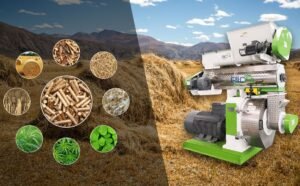
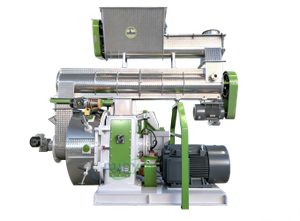
The conditioned material is fed into a cattle feed pellet making machine. This equipment compresses the material through a die to form dense, uniform pellets. The die hole diameter determines the pellet size. For cattle, pellet diameters typically range from 4 to 8 millimeters, depending on the age and size of the animals.
The pellets emerge from the die at high temperature and are then cooled. The cooler reduces the temperature and moisture content to stable levels. The cooled pellets are screened to remove fines, which are returned to the process.
The Importance of Pellet Quality
Pellet quality is important for cattle feed for several reasons. Durable pellets resist breakage during handling and transport. They maintain their form in the feed bunk, reducing waste and ensuring consistent intake.
Pellet quality is affected by several factors. The particle size of the ground ingredients affects the binding. The conditioning temperature and moisture affect the activation of the natural binders. The die design and roller adjustment affect the compression.
Poor pellet quality leads to increased fines. Fines are small particles that break off from the pellets. They can be blown away by wind or separated during handling. The animal may not consume them efficiently, leading to waste.
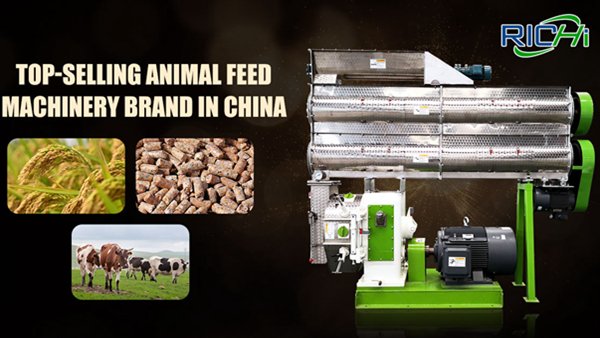
Richi Machinery offers cattle feed pellet making equipment designed for the specific requirements of ruminant feed production. The die and roller configurations are matched to the material characteristics. The conditioning systems are designed for the optimal parameters. The control systems maintain consistent operation.
Economic Considerations for Producers
For cattle producers, the decision to produce feed on-site involves several economic considerations. The cost of ingredients, the cost of purchased feed, and the capital cost of equipment all factor into the calculation.
Producing feed on-site offers several advantages. The producer can control the ingredient quality and adjust the formulation based on the animals’ needs. The feed can be produced fresh, reducing the risk of spoilage. The transportation costs can be reduced.
The capital cost of a cattle feed pellet making machine depends on the capacity and the configuration. Smaller machines suitable for on-farm use are available. Larger machines appropriate for commercial production are also available. The payback period depends on the volume of feed produced and the savings compared to purchased feed.
The operating costs include electricity, labor, and maintenance. The electricity consumption depends on the motor size and the efficiency of the equipment. The labor cost depends on the level of automation. The maintenance cost depends on the quality of the equipment and the operating conditions.
Nutritional Considerations for Pelleted Cattle Feed
The pelleting process affects the nutritional value of the feed in several ways. The heat and pressure can gelatinize the starches, making them more available to the animal’s digestive enzymes. This improves the energy value of the feed.
The heat can also affect the protein. The protein can be denatured by the heat, which can affect its availability in the rumen and intestine. The degree of denaturation depends on the temperature and the duration of exposure.
The fiber content is generally not affected by pelleting. The fiber provides the physical structure that the rumen needs for proper function. The particle size of the fiber is determined by the grinding step.
For dairy cattle, the pelleting of the concentrate portion of the diet can improve intake and milk production. The pelleting reduces the sorting of ingredients, ensuring that each cow receives a balanced diet. The heat treatment can improve starch digestibility, providing more energy for milk production.
The Equipment and Its Operation
The operation of a cattle feed pellet mill requires attention to several parameters. The feed rate must be matched to the die capacity. The conditioning temperature and moisture must be maintained within the target range. The die and rollers must be inspected regularly for wear.
The operator should be trained on the equipment and the process. The training should cover the settings for different ingredients, the routine maintenance procedures, and the troubleshooting of common problems.
The availability of spare parts is important for minimizing downtime. The die and rollers are wear items that will need to be replaced periodically. The bearings and seals should be inspected and replaced as needed.
The Path Forward
Cattle feed production requires attention to the specific nutritional and physical needs of the animal. The pelleting process can improve the handling characteristics of the feed and the digestibility of some ingredients. But the processing parameters must be carefully controlled to achieve the desired results.
The equipment for cattle feed pelleting is available at different scales. The investment in a pelleting line must be based on a clear economic analysis. The savings from reduced feed costs and improved animal performance must be weighed against the capital and operating costs.
For producers seeking reliable equipment and support, Richi Machinery offers solutions designed for the specific requirements of cattle feed production. The robust construction and precise control systems contribute to consistent operation and high-quality pellets.