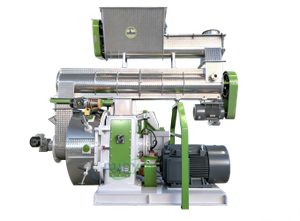
Production records are one of the best ways to distinguish a repeatable manufacturing system from a workshop that depends mainly on individual experience. A pellet equipment supplier does not need to disclose confidential customer information, but it should be able to show examples of the records used to control materials, machining, fabrication, assembly, testing, revisions, and shipment. These documents help a buyer understand whether quality and delivery are managed through a system that can be repeated across projects.
Why Production Records Matter
Pellet plants operate under vibration, dust, heat, continuous load, and changing raw-material conditions. Reliability depends on many details that are difficult to judge after a machine is painted and assembled. Records create traceability between design requirements and the physical machine. They show which drawing revision was used, what material was received, which dimensions were measured, how the machine was tested, and what corrections were made before shipment.
The purpose is not paperwork for its own sake. Good records make problems easier to diagnose, improve repeatability, support replacement parts, and provide evidence that inspection occurred before the product left the factory.
1. Approved Drawings And Revision History
The basic production record is the controlled drawing. Ask how the manufacturer identifies drawing revisions and prevents obsolete versions from remaining on the shop floor. Mechanical drawings should define dimensions, tolerances, materials, welding requirements, interfaces, and component specifications needed by production.
For complete pellet lines, revision control also applies to process diagrams, layouts, steel structures, foundation drawings, electrical diagrams, and cable schedules. A customer change should be reflected consistently across affected documents rather than appearing in only one drawing.
2. Incoming Material And Component Records
A professional manufacturer purchases steel, motors, gearboxes, bearings, sensors, electrical devices, valves, seals, and other components according to defined specifications. Ask for examples of receiving inspection records or material verification. These may include purchase specification, model, quantity, supplier, material grade, dimensions, certificates where applicable, and acceptance status.
- Steel grade and thickness checks
- Motor power, voltage, frequency, and enclosure data
- Gearbox model and ratio verification
- Bearing and seal specification checks
- Electrical component model verification
- Records for rejected or incorrect incoming items
The exact form can vary, but there should be evidence that purchased parts are compared with engineering requirements before being installed.
3. Machining Inspection Records
Critical parts such as shafts, bearing seats, housings, flanges, roller components, and couplings should have dimensional inspection records. Ask the manufacturer to show a sample inspection sheet tied to a part drawing. It should identify the feature being measured, required value or tolerance, actual result, inspector, and date.
Not every dimension needs a permanent record, but critical characteristics should be controlled. This is particularly important for fits, concentricity, alignment surfaces, and interfaces that affect rotating equipment. The existence of recorded measurements is stronger evidence than a general statement that CNC machines are accurate.
4. Welding And Fabrication Inspection
Fabricated equipment and structures may require records for material preparation, dimensions, weld inspection, distortion checks, and final fit. Large bases, frames, hoppers, coolers, bins, platforms, and support structures should be checked before paint hides the work.
Ask how the factory verifies squareness, hole positions, flange alignment, and assembly interfaces. For critical welds, the manufacturer should be able to explain its welding procedures and any inspection method used. The objective is to verify that fabrication quality is actively controlled rather than corrected only during final assembly.
5. Heat Treatment Or Surface Treatment Records
Some wear parts, shafts, dies, rollers, or other components may require heat treatment, hardening, surface preparation, or special coating. When these processes are important to performance, the supplier should retain evidence of the specification and acceptance result. If the process is outsourced, the manufacturer should still control the requirement and inspect the returned part.
These records are useful because appearance alone cannot confirm hardness, treatment depth, or process parameters. Buyers do not need every proprietary detail, but they should know that the process is defined and verified.
6. Assembly Checklists
Assembly records should show that important installation steps are checked consistently. Depending on the machine, this may include bearing installation, lubrication, shaft alignment, gearbox and motor mounting, coupling alignment, fastener checks, seal installation, rotor clearance, door adjustment, guard installation, and sensor position.
For pellet mills, the relationship between the ring die, rollers, main shaft, bearings, drive system, lubrication, and feeding system is particularly important. A structured checklist helps ensure that assembly quality does not depend only on whether an experienced technician happens to be working that day.
7. Electrical Panel And I/O Test Records
For a complete pellet plant, ask to see how control panels are verified before shipment. Useful records can include panel inspection, component checks, terminal verification, insulation or continuity checks where applicable, PLC input/output tests, emergency-stop circuits, interlocks, alarms, and variable-frequency-drive parameters.
Electrical labels should match the drawings. PLC and HMI program backups should be controlled by project and revision. These records are valuable during commissioning because technicians can compare site behavior with factory-tested configuration.
8. Machine Trial-Run Records
Ask for an example of the factory test report used before shipment. A no-load test may check motor direction, abnormal noise, vibration, lubrication, leakage, bearing temperature, sensor response, guards, and basic control functions. Some machines can also be tested with material when the factory has appropriate facilities.
- Machine identification or serial number
- Test date and responsible personnel
- Test duration
- Items checked
- Measured results when relevant
- Problems found and corrective action
- Retest confirmation
A trial-run record demonstrates that testing is a defined production milestone rather than an informal activity.
9. Nonconformance And Corrective-Action Records
No credible factory should claim that nothing ever goes wrong. Ask how incorrect dimensions, damaged components, weld defects, electrical errors, or test failures are recorded. A nonconforming item should be identified, segregated when necessary, evaluated, corrected or replaced, and verified again before use.
Repeated problems should trigger root-cause review. These records help the manufacturer improve production rather than repeatedly correcting the same issue at final inspection or at customer sites.
10. Project Production Schedule And Milestones
Production records are not only about quality. For complete pellet plants, the manufacturer should have a schedule showing engineering release, procurement, machining, fabrication, assembly, electrical work, testing, packing, and shipment. Buyers can ask for milestone updates without requesting confidential details about other projects.
A structured schedule reveals whether the promised delivery date is connected to real factory capacity. It also helps identify customer approvals that could delay production, such as layout confirmation, voltage information, or packaging requirements.
11. Packing And Shipment Records
International projects need accurate packing lists, equipment numbers, package identification, weights, dimensions, and container assignments. These records should match the project drawings and installation sequence. Good packing documentation makes it easier for the customer to receive, store, and locate components at site.
For machines that are dismantled for transport, the manufacturer should record how modules are identified and how they are reassembled. Missing labels can turn installation into an unnecessary search exercise.
12. Final Documentation Package
Before shipment or commissioning, ask what technical records will be handed to the customer. Depending on the scope, this can include final drawings, manuals, equipment lists, electrical diagrams, motor lists, PLC backups, drive parameters, lubrication information, wear-part information, foundation drawings, and test documents.
The value of the final package becomes clear years later when the plant is maintained, modified, or expanded. A machine without reliable records becomes more dependent on individual memory and现场 measurement, while a documented machine remains easier to support.
A Practical Record Checklist
| Record | What It Proves | When To Review |
|---|---|---|
| Controlled drawings | Production used defined requirements | Before manufacturing |
| Incoming inspection | Purchased items were verified | During procurement |
| Machining records | Critical dimensions were checked | Factory visit |
| Assembly checklist | Key assembly steps were controlled | Before testing |
| Factory test report | Machine functions were verified | Before shipment |
| Final documentation | Customer can operate and maintain the project | Before handover |
How RICHI Machinery Fits This Evaluation
RICHI Machinery combines equipment manufacturing with complete pellet plant engineering and project delivery. Buyers can review the company’s manufacturing and project scope through pellet plant projects. More than 30 years of industry experience and over 2,000 delivered projects provide a broad base for standardized project records, but buyers should still ask to see examples relevant to the proposed equipment.
The most useful approach is to select one comparable machine or project and ask the manufacturer to demonstrate its document trail from approved drawing through production and final test. This makes the evaluation concrete.
What If The Manufacturer Will Not Share Customer Records?
Confidentiality is a reasonable limitation. A professional supplier should not disclose another customer’s commercial information or protected drawings. However, it can normally show blank forms, anonymized examples, sample inspection reports, internal procedures, or records from demonstration equipment. The objective is to verify the system, not to access another buyer’s private data.
A blanket refusal to show any evidence of production control is different from protecting customer confidentiality. Buyers should distinguish between the two.
Final Recommendation
Before choosing a pellet equipment manufacturer, ask for examples of controlled drawings, incoming inspection, machining measurements, fabrication checks, assembly checklists, electrical tests, factory trial runs, nonconformance records, schedules, packing lists, and final documentation. You do not need every record from every project; a representative sample is enough to understand whether the system is real.
A supplier that can trace a machine from design requirement to manufactured part, inspection result, final test, and shipment has stronger evidence of repeatable production capability. Those records also become a practical foundation for maintenance, troubleshooting, replacement parts, and future plant expansion after the equipment is installed.